Showing posts with label exhibits. Show all posts

Wednesday, May 13, 2015

Natalie Frank: Tales of the Brothers Grimm


Natalie Frank: Tales of the Brothers Grimm is officially released on May 26th but is shipping now.


Natalie emailed me to share some info about the book and an art exhibit featuring her work. Here are some of the images from the book and Natalie's own words. You can click on the images to see them larger.


From Natalie Frank's email to SurLaLune:

I am an artist in NY and have just put out my first book, picturing 36 tales of the unsanitized Grimm fairy tales. It has hand-drawn marginalia throughout, 75 color drawings--a third of which are on view at The Drawing Center now in Soho through late June--and has an introduction by Jack Zipes, whose translations I also used, and essays by feminist art historian Linda Nochlin and the curator at The Drawing Center, Claire Gilman and a conversation with theater director and designer, Julie Taymor. It is published by Damiani and distributed by DAP. It was a blast to do and is the largest collection of Grimm's every illustrated by a fine artist. I found them to be such remarkable stories, especially as the originals from 1812-57 are so unknown in their real forms.


Book description:

For Tales of the Brothers Grimm, 36 celebrated and lesser-known of the unsanitized fairy tales collected by the illustrious brothers were carefully chosen by artist Natalie Frank, reinterpreted in 75 gouache and chalk pastel drawings, and cast in a Surrealist dreamscape. This volume, designed by Marian Bantjes, is the largest collection of Grimms' Fairy Tales ever illustrated by a fine artist. Frank's irreverent palette, sophisticated use of color and inventive depiction of these dark narratives capture the original stories with a contemporary and unflinching eye. Each of the tales opens with a hand-drawn title page and is framed by a unique border; small drawings punctuate each story in the tradition of classic fairy-tale editions. The foremost Grimm scholar, Jack Zipes, introduces the book.

Tuesday, July 2, 2013

Search for the Unicorn: The Cloisters


No, the SurLaLune blog has not been abandoned, I promise. It is a demanding and time consuming enterprise, however, and my time has been needed elsewhere. I plan to return with more regular posting after this holiday week--in the U.S. this is one of the most popular vacation weeks of the year. I am spending the week not on vacation but catching my breath and regrouping after several weeks (months!) of living at a higher speed. Really, it feels like I have been doing that since last year when I bought a new house. I've never really caught up!

Anyway, since others are on vacation this week, perhaps in New York City, I wanted to share this email I received--the design is prettier than the imagery on the website, but I will direct you there, too. I cannot be too enthusiastic about the Cloisters for myself. My visit was my last stop during a multi-day trip to NYC five years ago and was an unexpected highlight. I have copied and pasted my description of the experience below. So if you are in NYC, don't miss a trip to see the Search for the Unicorn exhibit. I would love to see it myself!


From my June 2008 journal:

Then we headed to the Cloisters. I was along for the ride at this point, interested, but not intent. Mom’s interests lie in Medieval Art so she was the primary fan girl. At least until we got there. Then I became one, too.

The Cloisters is beautiful. It is an amazing blend of old and new, seamless to the untrained eye. I walked from room to room and enjoyed the art, but I thrived on the architecture and atmosphere. For the first time in five days, even longer really, I was at peace. The thick walls, dense foliage, and dazzling sunlight all served to divorce me from the noises of New York. I began to understand the appeal of a cloistered life, surrounded by art and peace, divorced from the outside world.

Then I met the Unicorn Tapestries. I’ve managed to meet several famous works of art over the years, the ones that are so familiar they feel anticlimactic when you finally meet them. Some leave you amused, like the Mona Lisa. Others leave you confused, like the Blue Boy. A few leave you breathless. Winged Victory did that to me in the Louvre.

The Unicorn Tapestries stunned me. I understand the appeal. I read about them years ago, as an early teen, when I was in my unicorn loving state of being. Yes, I went through that. The story wasn’t quite romantic or fantastical enough for me then, so I forgot most of it and just smiled whenever I saw the tapestries in books or elsewhere. Not of much interest to me, I thought.

Wrong. They are beautiful. I’ve never met other tapestries like them. My timing to their room coincided with a school group and a learned guide, so I got to hear a longish lesson about them as I gazed upon the intricate weaving and marveled at their size. I fell in love. I wanted to bring one home with me. I have to settle for a book and a Michael Michaud necklace of holly leaves derived from one of the tapestries.

I snuck back to the room thrice to view them “one last time.” A friendly guard came up and pointed out the hidden frog to me, delighted with my delight in them.

We ate lunch in a courtyard where Dad and I snuck bits of bread to tiny sparrows I couldn’t help but converse with. They are so much friendlier and sweeter than pigeons. Mom just rolled her eyes, convinced someone would tell us to stop. I couldn’t help myself, but there weren’t any signs so I was breaking no rule I knew of.

Then we explored the kitchen garden full of herbs and other plants, carefully and clearly labeled, so many that I have read about over the years since they figure so well in fantasy literature but have never met in person. So the Cloisters offered many unexpected delights and a peacefulness that encompassed me the rest of the day as we traveled back to the hotel, to the airport and on to home.

Tuesday, April 2, 2013

In Fairy Land Exhibit and Why Print Fairy Tales Matter by Dr Rebecca-Anne C. Do Rozario


Dr Rebecca-Anne C. Do Rozario has a blog at Doc-in-Boots where she recently shared her speech, WHY PRINT FAIRY TALES MATTER, which she presented for the opening of the In Fairy Land exhibit at Monash University. Monash is in Australia, so I know it's not convenient for many readers here to visit, but thankfully there is also a virtual exhibition with many, many images to view online. Edited to add link to the exhibition catalog PDF which contains all of the images and more explanations.

From the exhibition's site:

This exhibition is a wonderful opportunity to see the fairy tale marvels that lie within the Monash Rare Books Collection and is a tribute to the efforts of its caretakers.

The exhibition can be seen from 6 March - 7 June 2013 at the Rare Books Exhibition space, Level 1, ISB wing, Sir Louis Matheson Library, Clayton campus, Monash University.

And from WHY PRINT FAIRY TALES MATTER:

However, collections like this shouldn’t simply be a preservation of the past. I don’t want to see these tales confined to the Rare Books reading rooms, though I’m incredibly grateful they’re safe here! The tales you see today, kept whole through ink, paper, thread and leather, should continue to be read, to be told, to influence. My hope is that exhibitions such as this will encourage people to learn more about Cinderellas and Jacks and Snow Whites, about talking birds and wise fish, and all sorts of marvels, some sublime and some downright bizarre. My hope is that you will discover tales you never knew and read them and tell them and retell them and pass them on. My hope is that you’ll take the time to become acquainted with the times and places that reshaped tales, providing them with oddities and idiosyncrasies that may have lasted for just one telling but remain to be discovered in the pages of a book.

I think, too, that exhibitions like this allow us all to see the place that fairy tale holds in literature. Fairy tales aren’t simple. They aren’t simply for kids – and in many cases, you’d probably rather the kids weren’t reading them. While they did pass along morals and advice, more often than not, they also cheated the status quo, cheekily overturning the limitations imposed by society upon its subjects. I’ve always loved reminding students that the princess didn’t always obediently, passively kiss the frog when he puckered up– she used to slam him up against the wall, fed up with his impositions and determined not to share her bed with a slimy amphibian. It’s only then he turned into a prince, proving that getting mad can win a girl her prince charming.

It matters that we understand who told fairy tales, how they came to be written and illustrated, how they were adapted by their authors. While we have lost the multitude of voices who shared and invented the heroes, the villains, the transformations, magical spells and enchanted objects, left with only random impressions of the words recorded, edited, re-arranged, we do have a vast catalogue of printed words and marvellous illustration. Some are well read, some are scribbled over, some were treasured, some were studied, but the tales in print are just as inventive, diverse and creative as those tales from their cousin, the oral tradition.

A long excerpt, but do click through and read it all, too.

Wednesday, September 19, 2012

Grimms' Anatomy Exhibit at the The Mütter Museum at The College of Physicians of Philadelphia


Grimms' Anatomy

Magic and Medicine: 1812-2012


Exhibit at the The Mütter Museum at The College of Physicians of Philadelphia

The bodies of fairy tale characters are rarely ordinary. They may be injured through acts of violence, healed or harmed by medicinal potions, or altered by magical transformations. Though many fairy-tale bodies belong to the realm of the marvelous, some have real-world counterparts. In honor of the 200th anniversary of the publication of The Fairy Tales of the Brothers Grimm, this exhibit will present real-world examples of the sometimes gruesome or grotesque fairy tale bodies, along with instruments from and rare illustrated editions of these stories. On view in the Main Museum Gallery. Free with Museum Admission.

It opened September 12th, but I don't have more information than the above. Hopefully the curators, Anna N. Dhody and Linda Lee, will share more with us in a future post! I had the opportunity to hear a little about it when I talked to them at Harvard in February but I admit my brain has buried most of the conversational details deep in my psyche! February feels like years ago, instead of only months. But then again, I don't live in the same place I did then either...

Thursday, August 23, 2012

Sleeping Beauties in Ukraine Art Installation

From National Art Museum Of Ukraine's "Sleeping Beauty" Exhibit Invites Men To Awaken Beauties With A Kiss By Katherine Brooks:

A group of women were slated to snooze in the central gallery of the National Art Museum of Ukraine this month, inviting worthy male suitors to try and wake the slumbering women with a single kiss. They're not under the spell of an evil witch or a poison apple however; instead, the ladies been recruited to participate in an art exhibit appropriately titled "Sleeping Beauty."

The fairy-tale inspired project was imagined by Ukrainian-Canadian artist Taras Polataiko. Influenced by an old story by Charles Perrault, where a young maiden is cursed to sleep for 100 years, only to be awakened by true love's kiss. In the spirit of this "once upon a time" literature, Polataiko cast several female volunteers as his performance beauties, tasked with "sleeping" in the Ukrainian museum for two hours at a time, every day from August 22nd until September 9th. Dressed in white and laid upon an elevated bed, the women lay motionless in the museum's space, awaiting a kiss from that one perfect museum patron.

But there's a serious legal catch to the piece. To participate in the exhibit, potential princes have to sign a contract that states, "If I kiss the Beauty and she opens her eyes, I agree to marry her." The female performers have also entered into an agreement that reads, "If I open my eyes while being kissed, I agree to marry the kisser." So unlike the chivalrous charmers of yore, these contemporary heroes are contractually bound to live happily ever after if their princess so chooses.

This modern interpretation of damsels in distress gives the woman a say in whether she will be rescued or not, though the performance still adheres to the archaic concept that only a male will awaken the sleeping princesses. "The tension of the performance is in the seductiveness and fear of the ultimate moment," describes the exhibit's press release. "The viewer will have to think twice before kissing the Beauty. The Beauty will have to decide if the ultimate moment has come or not. The show will end the moment the Beauty opens her eyes."


Tuesday, February 28, 2012

Amy Stein in Fairy Tales, Monsters, and the Genetic Imagination

Amy Stein. Watering Hole, 2005.

Amy Stein has two pieces featured in Fairy Tales, Monsters, and the Genetic Imagination at the Frist Center.

Of course, when one attends a curator's tour of an exhibition, your attention tends to focus on the pieces discussed. There were a few exceptions for me, pieces I will go back and study more and see what resonates when I am on my own, but I know these would have had an impact even if Mark Scala hadn't spent time discussing them. Scala pointed out that these were perhaps the least fantastical pieces in the exhibit but that is what gives them their power, too.

I found these images on Amy Stein's website and discovered they are part of a larger series titled Domesticated, all of which are viewable on her website and I recommend the click to see them.

These certainly, subtly, recall fairy tale themes, Goldilocks and Little Red Riding Hood come immediately to mind. But for me, they also reminded me of how nature is nearby, closer than many of us in suburban and urban lifestyles credit at times. I've lived within a mile of a lake for many years in my life, but spend very little time at it. The wildlife nearby is abundant. We've seen a bobcat and a wild boar as well as opossums, turtles, deer, etc. on a regular basis. Snakes are not as common, but I remember unlocking the backdoor to the house one day, years ago, and looking down to see a snake sunning itself along the threshold. Fortunately, it wasn't poisonous but we spent a few minutes evaluating each other just like the girls in these photos are doing.

The Watering Hole image above is more powerful in person because the girl's face is more visible, both startled and fascinated. You can click on it to see it larger but an original print is the best.

Amy Stein. Predator, 2006.

Monday, February 27, 2012

Kiki Smith in Fairy Tales, Monsters, and the Genetic Imagination


Born by Kiki Smith

The Fairy Tales, Monsters, and the Genetic Imagination exhibit offers two works by Kiki Smith. I'm going to share the same images from yesterday's post of the works, published by the Nashville Scene. Multiple images of both of these works can be found around the web. For fairy tale devotees, they are perhaps the most well-known images in the exhibit.

I am not an expert on Smith's work, but have admired it for a long time now. One of the best websites about her work is MoMA's site dedicated to an exhibition of her work at Kiki Smith: Prints, Books & Things. You can read about Smith's Little Red Riding Hood works in the section labeled Feminine Contexts. From the MoMA site:

Smith's most recent print on the subject of "Little Red Riding Hood," Born, is a more violent reading of the story, depicting the wolf with blood dripping from its mouth. It is based on the ending of some versions of the story, in which the little girl and her grandmother emerge from the wolf's stomach after being eaten. This interpretation implies salvation and rebirth; and is fused with Biblical overtones and Virgin Mary symbolism; as well as Smith's simultaneous explorations into the figure of Sainte Genevieve (see "Rapture" below). The monumental lithograph; which took over three years to complete; went through a dynamic series of stages before Smith settled on the final version.

Rapture by Kiki Smith

Rapture, while it certainly draws upon Little Red Riding Hood, too, is primarily inspired by St. Genevieve.

From Art21 at PBS:

In several of her pieces, including "Lying with the Wolf, Wearing the Skin," and "Rapture," Smith takes as her inspiration the life of St. Genevieve, the patron saint of Paris. Portrayed communing with a wolf, taking shelter with its pelt, and being born from its womb, Smith’s character of Genevieve embodies the complex, symbolic relationships between humans and animals.

The following is a segment from PBS's Art 21 on Kiki Smith's work in her own words.


Watch Stories on PBS. See more from ART:21.

And, as always, here is the exhibition catalog:

Sunday, February 26, 2012

Fairy Tales, Monsters, and the Genetic Imagination Exhibit Preview


I have the opportunity to attend the media preview of Fairy Tales, Monsters, and the Genetic Imagination this past week. The exhibit opened here in Nashville on Friday at the Frist Center. This week I plan to highlight the work of several of the artists represented in the exhibit, but that begins tomorrow. Today I wanted to share a link and a few of the images from the Nashville Scene's preview of the exhibit installed to entice you to go over there and look.

Go to Installation View: Fairy Tales, Monsters and the Genetic Imagination at The Frist by Laura Hutson to see many more pictures than these. The three I share here are borrowed from the article and all rights belong to the photographer and Nashville Scene. I was there when these were take and managed to only get half photographed in one. (So, nothing for Pinterest, Gypsy. Grin. I like it that way.)

The exhibition catalog is already temporarily out of stock at Amazon which I hope means there was a demand for it since I know it shipped to at least one friend this week. (It also was probably fairly low inventory since Amazon had bumped the original ship date to late March and then shipped copies this week when they became available to those who preordered.) The catalog has two great essays by Jack Zipes and Marina Warner which will be of particular interest to readers here.


The exhibit moves to Winnipeg this summer and then on to Calgary. Here in Nashville, however, one can still attend a few curator tours which expand upon the collection even more. Mark Scala brings out nuances and details in the collection that I may have missed after several visits.


For those only interested in the fairy tale aspect of the exhibit, the out right fairy tale interpretations are limited to the first room and then the exhibit expands to fairy tale and folklore inspired themes and moves on to monsters, etc. I think it is still worth the price of admission to you, too. Here in Nashville, the fairy tales are in a cave like room, with trees surrounding the doorway. The forest theme is perfect and the exhibit's designers did a great job with colors and displays. (I'm always impressed with the Frist's display decisions in exhibits like these.)


Friday, December 30, 2011

Paper Tales Exhibition in Hong Kong: The Snow Goddess


Here's an exhibit devoted to HCA's Snow Queen (here called Snow Goddess) in Hong Kong the past month. It is still showing until January 20th.

Press Release:

Magical Journey with Swire Island East’s Paper Tales

Swire Island East, in collaboration with the Hong Kong Youth Arts Foundation (YAF), presents Paper Tales – an awe-inspiring exhibition featuring delicate works from 11 local artists and 23 local students using paper as a medium to create objects of innovation and artistry. Led by the project’s main artist SumSum Tse, Paper Tales will be held at Swire Island East’s ArtisTree from 11 December 2011 to 20 January 2012.

Paper Tales flaunts mastery, originality and the divergent adaptability of paper. Artists let their imagination run wild to conceive idiosyncratic installation works, demonstrating complex paper-cutting and book-carving of great finesse. Visitors will see a medley of arresting paper art forms that is not limited to fine cutting and folding. An eccentric and spellbinding art anatomy is showcased, complemented by ambient music composed by Nick Harvey and special lighting effects by Wong Chiyung.

Inspired by Hans Christian Andersen’s Snow Goddess, Paper Tales is a magical journey in four chapters encompassing the poetic works of local creative force. The story begins with Pauline Yau’s maze-like Ice Tunnel of light and shadow. Weaving the way through the tunnel, visitors will arrive at Percy So’s Story-telling Installation. Four paper sculptures crafted in traditional paper art techniques unveil the legend of the Snow Goddess.

The tunnel finally opens up to a mysterious icy world. In a secluded setting, the Snow Goddess’s Crystal Palace produced by SumSum Tse emerges as the centrepiece of the exhibition. Visitors will be greeted by the mystical Snow Goddess in an animated projection casted above the Palace.

Teardrops of the affectionate Snow Goddess are transformed into eight Small World Dioramas of floating islands contriving a galactic abyss. Contributing artists include: Aeroporto, Margaret Chu, Graphic Airlines, Candice Keung, Hanison Lau, Salon de Pigeon and Tereza Tan. This section will also feature miniature sculptures created by local secondary students who learned from SumSum Tse through a series of workshops organised by YAF.

The exhibition also offers free guided tours and DIY ornament making workshops during which participants will learn to make crafted objects with used paper.
The images below came from an article at How to enjoy Christmas in Hong Kong while the poster came from the event site.


Pauline Yau makes fragile paper look menacing in her work "The Ice Tunnel."

Wednesday, December 14, 2011

More About: Fairy Tales, Monsters, and the Genetic Imagination


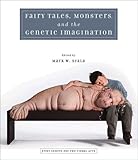
Fairy Tales, Monsters, and the Genetic Imagination

I posted previously about the upcoming exhibit, Fairy Tales, Monsters, and the Genetic Imagination, in my own Nashville in 2012. Now I have much more extensive information about it. All the text below is from the press releases with hyperlinks and imagery added by myself:

Fairy Tales, Monsters, and the Genetic Imagination, an exhibition of photographs, paintings, videos, sculptures and installations by contemporary artists who invent humanlike, animal or hybrid creatures to symbolize life’s mysteries, desires and fears, opens Feb. 24 and remains on view in the Frist Center for the Visual Arts’ Upper-Level Galleries through May 28, 2012.

The invented creatures and imaginary worlds featured in the exhibition have been inspired by oral and written sources as diverse as Aesop’s Fables, Mary Shelley’s Frankenstein, science fiction and the products of genetic experimentation in actual science. The artists selected for the exhibition redirect the emotional associations implicit in their sources–pleasure, fear, wonder, curiosity and longing–to works of seductive fantasy and uneasy intrigue.

Organized by Frist Center Chief Curator Mark Scala, the exhibition will travel to Canada in 2012 to the Winnipeg Art Gallery, Manitoba and Glenbow Art Museum, Calgary.

“I have long been intrigued by artists and filmmakers for whom geneticists’ capacity to design new life forms has inspired fictional narratives of biological, spiritual and social transfiguration,” says Scala. “Paradoxically, in imagining futuristic fables and hybrid creatures, these artists have often borrowed from the ancient language of myth, folklore and legend, in which the human and animal are mixed together to symbolize life’s contradictions. Connecting past and future, the artists in the exhibition explore the hidden meanings behind composite creatures as they are transformed from fantasy to reality.”

The first section of the exhibition, The Fairy Tale, focuses on artists whose works adapt, interpret or critique traditional fairy tales and nursery rhymes. While questioning the socializing functions of fairy tales that perpetuate outmoded cultural stereotypes, these works also explore folklore as archetypal expressions of subliminal fears and desires. Taking a cue from Sigmund Freud’s view of the fairy tale as a vehicle for projecting an animistic view of humanity’s relationship with nature, the exhibition will consider the ways such tales extend the tradition of creating anthropomorphic beings as metaphors for the natural, rather than the social, side of humanity. In this section are works by Meghan Boody, Walter Martin and Paloma Muñoz, Paula Rego, Tom Sachs, Allison Schulnik, Kiki Smith and Amy Stein.

In Monsters, the second section in the exhibition, artists explore the depiction of the monster as a sign of the threatening “other” or of the uncontrollable forces of the psyche. The diversity of their imagery reflects the multiple associations of the word “monster,” which comes from the Latin verb monere, “to warn.” In cultures around the world, monsters have been conceived as inhuman or part-human brutes that threaten those who violate the psychological or social boundaries they were invented to protect. The monster often takes the form of the chimera, a hybrid creature that signifies the violation of natural boundaries, as in the story of Dr. Frankenstein’s monster. Artists featured in Monsters include David Altmejd, Ashley Bickerton, the Chapman Brothers, Marcel Dzama, Andre Ethier, Mark Hosford, Cindy Sherman and Yinka Shonibare.

The Genetic Imagination is the final section in the exhibition. Moving from superstition and fantasy to potential reality, the artists featured in The Genetic Imagination depict new chimeras—evocations of the hybrid human/animals of old—while reflecting actual scientific developments toward the redefinition of life, especially in the field of genetic engineering. Echoing a split that occurs in much science fiction literature and movies, some artists raise cautions about the unforeseeable consequences of such experiments. They anticipate the introduction of powerful new mutations, monsters and other potential horrors that may redefine or threaten human life. For others, the creative potential of these developments is exhilarating and promises to take the interaction between art and science to a heretofore unimaginable liberation from biology.

The works of Suzanne Anker, Aziz + Cucher, Trenton Doyle Hancock, Motohiko Odani, Patricia Piccinini, Janaina Tschäpe, Charlie White and Saya Woolfalk are included in The Genetic Imagination.

Exhibition Catalog

Fairy Tales, Monsters, and the Genetic Imagination

The illustrated catalog published by Vanderbilt University Press features essays by Mark Scala, Frist Center chief curator, Jack Zipes, retired professor of German and director of the Center for German and European Studies and the University of Minnesota; Suzanne Anker, professor at the School of the Visual Arts in New York and author of The Molecular Gaze: Art in the Genetic Age; and Marina Warner, professor in the Department of Literature, Film and Theatre Studies at the University of Essex, England.

Tour Schedule

Fairy Tales, Monsters, and the Genetic Imagination will travel to two venues:

Winnipeg Art Gallery, Manitoba Canada: June 15–Sept. 9, 2012

Glenbow Art Museum, Calgary, Alberta, Canada: Sept. 28, 2012–Jan. 2, 2013

Exhibition Credits

This exhibition has been organized by the Frist Center for the Visual Arts.

Exhibition Acknowledgements

The Frist Center for the Visual Arts is supported in part by the Metro Nashville Arts Commission, the Tennessee Arts Commission and the National Endowment for the Arts.

Exhibition-related Programs

Artist’s Performance by Saya Woolfalk: Lecture of the Artist: “Empathetic Plant Alchemy”

Friday, February 24
12:30 p.m. Auditorium
Free: Seating is first come, first served.

Saya Woolfalk’s recent work explores cultural transformation and hybridity by imagining the effects of crossing species. The artist uses a hybridized group of fictional “Empathics” to investigate systems of human classification and the reasons why we might choose to embody monstrous forms outside of known categories. In her performance Lecture of the Artist: “Empathetic Plant Alchemy,” Woolfalk will present a pseudo-scientific lecture about these Empathics who are slowly mutating to become like plants. The lecture will focus on animated images from a book called Empathetic Plant Alchemy and describe the merger of human and plant DNA.

This program has been developed in conjunction with Fairy Tales, Monsters, and the Genetic Imagination, and Saya Woolfalk is one of the artists whose work is on view in the exhibition.

Artists Panel: Invented Bodies/Hidden Meanings: Fables for our Times
Saturday, February 25
10:00 a.m.–12:00 p.m. Auditorium
Free: Seating is first come, first served.


Join moderator and Frist Center Chief Curator Mark Scala and panelists Saya Woolfalk, Trenton Doyle Hancock and Meghan Boody for a casual conversation among three guest artists who are represented in the exhibition Fairy Tales, Monsters, and the Genetic Imagination. The artists will offer their insights and perspectives on this exciting exhibition as Scala moderates what is sure to be a lively discourse of views and opinions. A question-and-answer session will form part of the overall discussion.

Curator’s Tour: Fairy Tales, Monsters, and the Genetic Imagination

Thursday, March 1 12:00 p.m.
Meet at exhibition entrance.

Free; with purchase of gallery admission

Join Mark Scala, chief curator at the Frist Center, for a conversation about artworks in this exhibition that convey themes of hybridity and anthropomorphism in the context of folklore, psychology, ethics, science and science fiction.


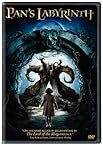
Unexpected Tales Film Series: Pan’s Labyrinth
Friday, March 16
7:00 p.m.
Auditorium
Free: Seating is first come, first served.

Fairy Tales, Monsters, and the Genetic Imagination, on view in the Upper-Level Galleries from February 24 through to May, 28, 2012, depicts composite beings and fantastic narratives that are influenced by literary sources from folk tales to science fiction. The exhibition explores themes of psychology, identity, and the future. Inspired by this constructed alternate world, the Frist Center has planned a three-part film series, Unexpected Tales, which will explore fairy tales through fantasy, monsters and genetic development.

About the film:

In 1944 fascist Spain, an imaginative young girl, along with her pregnant mother, begins a new life with her stepfather, a fierce captain of the Spanish army. At night she meets a fairy who leads her to a faun in the center of a labyrinth. The faun informs her that she is a princess and can only prove this by undertaking three grim tasks. If she is successful she will meet with her real father, the king. If she is not successful, she will never be a princess. The young girl is thrust into living two lives: one that is dark and oppressive and another that is terrifying yet alluring. Stars Ivan Baquero, Ariadna Gil and Sergi Lopez. Written and Directed by Guillermo Del Toro, 2006. 119 minutes. DVD. Rated R.

Invented Bodies/Hidden Meanings: Connecting Disciplines: “Ambivalence Towards Animals and The Moral Community”

Saturday, March 17
11:00 a.m.
Meet at exhibition entrance.
Free with purchase of gallery admission


Kelly Oliver, Ph.D., W. Alton Jones Chair of Philosophy with appointments in African-American and Diaspora Studies, Film Studies, and Women’s and Gender Studies at Vanderbilt University, will present a gallery talk in response to Fairy Tales, Monsters, and the Genetic Imagination. This talk will explore the ambivalence with which animals are treated as members of the moral community: on one hand, animals are treated as child-like innocents, while on the other, they are treated like monsters.

Oliver will discuss works in this exhibition in relation to this ambivalence while also exploring the ways animals and concepts of animality play into our fantasies and ideas about what is cruel, what is innocent, and what is natural and unnatural.

ARTini: Fairy Tales, Monsters, and the Genetic Imagination

Friday, April 13
7:00 p.m.

Meet at exhibition entrance.

Free with purchase of gallery admission

Join Keri Jhaveri, educator for youth and family programs at the Frist Center, as she leads an informal conversation about some of the works included in the exhibition Fairy Tales, Monsters, and the Genetic Imagination.

Are you curious about art? Do you want to learn more about the content and concepts behind an artist’s work? If you answered yes to either of those questions, then the ARTini program is for you! ARTinis are designed for everyone—from the novice to the connoisseur—and include informal and insightful conversations that offer a deeper understanding of one or two works of art in an exhibition.

Free Family Day Festival at the Frist

Sunday, April 15, 1:00–5:30 p.m.
Free

Enjoy a day of discovery and creativity, filled with art activities, live music and exciting demonstrations. Bring your family and friends to share in a day filled with art and imagination! Exhibitions highlighted during the free day include To See as Artists See: American Art from The Phillips Collection; Fairy Tales, Monsters and the Genetic Imagination; and Answers to Questions: John Wood & Paul Harrison.

ARTini: Fairy Tales, Monsters, and the Genetic Imagination
Tuesday, April 17
12:00 p.m.
Meet at exhibition entrance.
Free with purchase of gallery admission

Join Keri Jhaveri, educator for youth and family programs at the Frist Center, as she leads an informal conversation about some of the works included in the exhibition Fairy Tales, Monsters, and the Genetic Imagination.

Are you curious about art? Do you want to learn more about the content and concepts behind an artist’s work? If you answered yes to either of those questions, then the ARTini program is for you! ARTinis are designed for everyone—from the novice to the connoisseur—and include informal and insightful conversations that offer a deeper understanding of one or two works of art in an exhibition.


Unexpected Tales Film Series: Beauty and the Beast
Friday, April 20

7:00 p.m.
Auditorium
Free: Seating is first come, first served.


Fairy Tales, Monsters, and the Genetic Imagination, on view in the Upper-Level Galleries from February 24 through to May, 28, 2012, depicts composite beings and fantastic narratives that are influenced by literary sources from folk tales to science fiction. The exhibition explores themes of psychology, identity, and the future. Inspired by this constructed alternate world, the Frist Center has planned a three-part film series, Unexpected Tales, which will explore Fairy Tales through fantasy, monsters, and genetic development.

About the film:

Considered one of the finest fantasy films of all time, Beauty and the Beast is an adaptation of the traditional fairy tale in which Belle’s father is sentenced to death for picking a rose from the Beast’s garden. Belle’s father begs the beast for permission to see his family one more time before his death; when he returns home, Belle decides to take the place of her father and goes back to the Beast. Belle eventually becomes drawn to the Beast; he, in turn, falls in love with her and proposes marriage, which she refuses. As Belle is drawn closer to the Beast, he decides to test her feelings by allowing her to return home to her family and making it clear that if she does not return within a week, he will die of grief. This is a stunning film using surreal imagery and special effects to create a wistful, romantic story about never judging a book by its cover. Stars Josette Day and Jean Marais. Jean Cocteau’s adaptation, originally released in France as La Belle et la Bête. Written by Jeanne-Marie Le Prince de Beaumont and adapted and directed by Jean Cocteau, 1946. 120 minutes. 35mm. Unrated.

Monday, December 5, 2011

Playing at Princess and the Pea by Angie Duignan


'How does that story go again?' © Angie Duignan

I discovered this photo as part of the The Imagination of Children exhibit at the V&A Children's Museum during 15 October 2011 - 5 February 2012 when I was exploring their exhibit listings a few weeks ago. The exhibit doesn't appear to have a fairy tale emphasis, but this photo just grabbed me, so I wanted to share.

Haven't you wanted to sit on a pile of mattresses or even sleep on one ever since you first heard the tale?

A small display throughout the Museum bringing together the work of nine visual artists - Sonia Boyce, Sarah Cole, Angie Duignan, Richard Elliott, Rebecca Fortnum, Róisín Loughrey, Martin Newth, Ans Nys and Jessica Voorsanger - each of whom are fascinated by the child's ability to play, pretend and live through their imagination.

Each inspired by a different aspect of the Museum's collections, the works produced include paintings, drawings, photographs and video installations.

Wednesday, November 16, 2011

Magic Worlds Exhibit at V&A Children's Museum

'Fairy Queen' Cinderella dancing doll in original box, England 1955

Wouldn't you know that I learned about this one after my visit to London? Drat...
 From the V&A Children's Museum website:

Magic Worlds
8 October 2011 - 4 March 2012

Delve into the realms of fantasy, illusion and enchantment with our major new exhibition revealing how magic has been embraced for hundreds of years.

Magicians were and are held in high regard, some as popular entertainers and some as higher beings. From the Indian rope trick to Derren Brown’s modern take on illusion, adults and children alike have always been in awe of magic and its practitioners.

Magic Worlds explores the world of fairy tales and fantasy literature, the history and origins of magic and how themes of magic have influenced many artists and writers. The exhibition takes the visitor on a journey into miniature magical worlds, complete with witches, wizards, fairies and magical creatures. Objects on display include costumes, tricks and illusions, film merchandise, optical toys, paintings and ceramics, otherworldly dolls and puppets and illustrated books, together with interactive hands-on activities.

Fantasy
A world of marvellous tales and exciting adventures. To enter a fantasy world is to step outside reality and expect things to be different. Fairy stories are pure fantasy. These are old tales passed down originally by word of mouth and later collected together by people such as Charles Perrault and Jacob and Wilhelm Grimm.

Fantasy literature started in the mid 19th century. Some of these stories are about completely separate worlds - some that exist in their own right, like Middle Earth, and some, like Narnia, that ordinary people step into. In others, the real and fantasy worlds exist side by side, as in the Harry Potter books, operating for the most part exclusive of each other.

Illusion
This is a world where you cannot believe your eyes. People have always been fascinated by illusion and trickery. Optical devices, particularly in the 19th century, used scientific principles and were designed to both educate and entertain. They are still as intriguing today.

Magicians and magic have long been associated with Eastern countries. The tricks of Indian street markets were brought back to England during the 19th century and quickly gained a foothold in the world of variety theatre. Magicians became the film stars of their day and performed to the highest in the land. Today magic as spectacle has become commonplace and magicians appear regularly on television.

Enchantment
This is a world of magical creatures and beings. It is above all a place of the imagination.

People can experience wonder in everyday life but still actively seek it out in the worlds of fantasy and magic. Fairies and other magical figures inspire artists to produce work that can be beautiful or sinister, or both, reflecting the different aspects of enchantment.

Fairies, elves and pixies are usually regarded as kind creatures associated with the natural world. Witches and dragons generally belong to the darker side of magic. Other figures, such as wizards, mermaids and unicorns, lie somewhere in between.

Picture cubes, depicting a variety of fairy stories, Czechoslovakian, c.1930


And from Magic Worlds? The Museum of Childhood's show lives up to its billing: From Dürer to Harry Potter, an exhibition about the relationship between folk tradition and childhood comes up trumps by Jonathan Jones:

With great lightness of touch, Magic Worlds explores how folk traditions have interacted with the culture of childhood. It includes an early 19th-century painting of Cinderella by George Cruikshank, various editions of the fairytale collections of Charles Perrault and the Brothers Grimm, and ... Lego Harry Potter.

The Museum of Childhood is actually an outpost of the V&A, and I love the way this exhibition draws on the V&A collection – and loans including Derren Brown's props – to offer a genuinely rich exploration of its subject. It shows the ways magical beliefs become magical fictions, how fairytales evolved into fantasy literature, and how real superstition merges into conjuring tricks. Another fascinating exhibit is a 16th-century book on witchcraft that includes a depiction of the fairground trick known as the beheading of John the Baptist – a Tudor version of the modern magic trick of the assistant sawn in half.

I don't want to give a false impression of this show: it is no blockbuster. But it is an unpretentious, free, family exhibition at a museum whose main galleries are a treasure trove of historic toys. I learned more from it – and got more genuine pleasure from some of its exhibits – than many massively promoted, self-consciously intellectual events where children are encouraged to shush, instead of being invited to run about dressed as fairies. It continues through the winter, so if you missed it at Halloween it will add to the magic of the Christmas season.

Tuesday, November 15, 2011

Nursery Rhymes Exhibit in Santa Barbara, California


(This is just here for visual interest, I have no idea what images are in the exhibit itself.)

Nursery Rhymes Exhibit
The Karpeles, Santa BarbaraSanta Barbara, California
September 1 - December 29, 2011

A nursery rhyme is any verse that is customarily and traditionally said or sung to small children. From the point of view of definition, the source and age of the rhyme is immaterial, and it need not originally have been intended for children.

It becomes a nursery rhyme through usage.

Why are Most Nursery Rhymes Old?

When a child has to be entertained, the rhymes and songs most readily recalled are those from an adult's own childhood, and this is the reason why the nursery repertoire is traditional and remains moderately stable. A rare exception is a rhyme or song which was new when the adult was a child may occasionally come to mind along with the old verses, and thus enter the stream of tradition. Two such 'new-commers' are: Twinkle, Twinkle, Little Star (Written by Ann and Jane Taylor in 1806) and Mary Had a Little Lamb (Written by Sarah Josepha Hale in 1830).

The ages of nursery rhymes vary considerably, and the origin and history of each rhyme must be examined individually.


Original Illustrations will be on exhibit from:

Baa, Baa Black Sheep

Cock a Doodle doo

Goosey,goosey,gander

Hickety, pickety

Humpty Dumpty

Jack and Jill

King Arthur

Little Bo Peep

Ring a-round the roses

Simple Simon a

Simple Simon b

There was a crooked man

There Was a Little Man

This Little Piggy

Three wise men of Gotham

Wee Willie Winkie

Oranges and Lemons


In addition, The following will be included in the exhibit:

Charles Perrault
Jack and Jill by L. M. Alcott

This is the House/Jack Built

Thursday, August 25, 2011

Fairy Tales, Monsters, and the Genetic Imagination in 2012


Fairy Tales, Monsters, and the Genetic Imagination

Regular readers know that I live in the Nashville area. I was thrilled this past week when the Frist Center for the Visual Arts announced its upcoming exhibits for 2012 and one included fairy tales. It doesn't open until February 2012 here in Nashville but it will travel to two locations in Canada after it leaves here.

From the Frist Center's Press Release:
Fairy Tales, Monsters, and the Genetic Imagination
Feb. 24–May 29, 2012
Upper-Level Galleries
Fairy Tales, Monsters, and the Genetic Imagination is an exhibition of works by contemporary artists who invent humanlike, animal or hybrid creatures to symbolize life's mysteries, desires and fears. Finding inspiration in sources ranging from Aesop's Fables to the products of genetic experimentation, the artists in the exhibition examine interactions between nature and humanity in the context of oral and written lore, psychology, ethics and visions of the future in both science and science fiction. The exhibition will include approximately 60 contemporary paintings, photographs, sculptures and video works.
This exhibition is organized by the Frist Center for the Visual Arts and curated by Frist Center Chief Curator Mark Scala.

The exhibition will travel to Winnipeg Art Gallery, Manitoba, Canada: June 15–Sept. 9, 2012, and to the Glenbow Art Museum, Calgary, Alberta, Canada: Sept. 28–Jan. 2, 2013.
The exhibition is accompanied by a catalog published by Vanderbilt University Press.

The publisher description for the exhibition catalog provides a little more information as well as the image at the top of the post. It also includes essays from Jack Zipes and Marina Warner, superstars in fairy tale academia. Here's the description:

This catalog explores the psychological and social implications contained in the hybrid creatures and fantastic scenarios created by contemporary artists whose works will appear in the exhibition Fairy Tales, Monsters, and the Genetic Imagination, which opens at Nashville's Frist Center for the Visual Arts in February 2012. Curator Mark Scala's introductory essay focuses on anthropomorphism in the mythology, folklore, and art of many cultures as it contrasts with the dominant Western view of human exceptionalism. Scala also provides an art historical context, linking the visual fabulists of today to artists of the Romantic, Symbolist, and Surrealist periods who sought to transcend oppositions such as rationality and intuition, fear and desire, the physical and the spiritual.

Discussing how artists adapt traditional stories to give mythic form to the very real dilemmas of contemporary life, Jack Zipes's "Fairy-Tale Collisions" centers on Paula Rego, Kiki Smith, and Cindy Sherman. From a generation of women who have attained prominence since the 1980s, these artists alter fairy-tale imagery to subvert or rewrite social roles and codes.

In "Metamorphosis of the Monstrous," Marina Warner discusses works in the exhibition in the context of historical conceptions of monsters as expressions of alterity, bestiality, or sinfulness. Her reminder that contemporary monster images offer "a promise and a warning about the variety, heterogeneity, and possible combinations and recombinations in the order of things" sets the stage for Suzanne Anker's essay, punningly titled "The Extant Vamp (or the) Ire of It All: Fairy Tales and Genetic Engineering." Considering representations of hybrid bodies by Patricia Piccinini, Janaina Tschape, Saya Woolfalk, and others, which evoke imagined beings of the past as a way to envision the recombinant creatures that may lie in the future, Anker shows how artists explore the social, ethical, and future implications of biological design and enhanced evolution.

Accompanying an exhibition of contemporary art in which depictions of marvelous creatures and fantastic narratives provide both chills and delights, the essays in Fairy Tales, Monsters, and the Genetic Imagination explore the meaning of this fabulist revival through the lenses of social and art history, literature, feminism, animal studies, and science.
I am thrilled I will get to see the exhibit without traveling--and I am a Frist member, so that works, too!--and the catalog looks like a great addition to my library. If you are in the Nashville area anytime between February and May next year, include the Frist Center on your itinerary. (It's also right down the street from my high school alma mater.)

Monday, August 1, 2011

Colleen Moore's Fairy Castle


Colleen Moore's Fairy Castle has been mentioned on SurLaLune in years past but not on this blog. A recent article at The Daily Mail--Fit for a (very small) princess: The fairy tale dolls' castle worth half a million dollars--reminded me of that oversight which I am correcting today.

 From the Museum of Science and Industry, Chicago website:

Experience the enchantment of a Fairy’s dream home in Colleen Moore’s Fairy Castle. This elaborate miniature house was created by silent film star Colleen Moore in the 1930s, and was donated to the Museum of Science and Industry in 1949.

It will delight you with its tiny treasures—including murals and paintings painted by Walt Disney himself; chandeliers adorned with real diamonds, emeralds and pearls; the tiniest bible ever to be written, dating back to 1840; and ancient statues more than 2,000 years old.
But this one needs pictures and so I have some to share from the museum site with their descriptions as part of the online tour. Twelve images are offered there, but I am focusing on the rooms with predominant fairy tale inspiration.


The kitchen is filled with whimsical wall murals from various fairy tales. Over the door are the three Little Pigs, and to the right, Jack and Jill are tumbling down the hill. Humpty Dumpty can be seen through the archway and Little Bo Peep is above the stove. The copper stove is meant to be the stove in which the wicked witch locked Hansel and Gretel. Inside the oven is the pie that was baked with four and twenty blackbirds. The Royal Doulton dinner service on the table is an exact replica of the set made for Queen Mary's doll house at Windsor Castle.


Cinderella's Drawing Room


In Cinderella’s drawing room, the floor is made of rose quartz and jade from China. The chandelier hanging in the center of the room is gold, hung with real diamonds, emeralds and pearls. To the left you can see a little chess table just waiting for you to come and play. The mural on the wall is of Cinderella, and was painted by Walt Disney himself.

The vases at each side of the door going into the great hall are made of carved amber more than 500 years old. They came from the collection of the Dowager Empress of China.


Outside, above the room, is the good fairy welcoming you to Fairyland. Below her are figures of Cinderella, the prince and the wicked stepmother. The floating staircase in the center of the room has no railings because fairy folk balance themselves with their wings.


The ceiling of the Great Hall is painted in scenes from fairy tales. Over the door, at the back of the room, is a mural of the pied Piper of Hamlin—with the children climbing up the wall to get to him. The knights in armor, at each side of the door, are silver and came from the collection of Rudolph Valentino, a famous motion picture actor. The tall glass windows at the rear are etched to reflect the stories of Jack and the Beanstalk and The Princess and the Seven Swans.

In the roped-off sections are treasures of Fairyland. To the left and on a low rosewood table are Cinderella’s glass slippers. They are hollow with high heels and have tiny red glass bows. And under the glass bell, the tiny chairs of the three bears sit on the heads of pins—the largest weighing only 1/150,000th of an ounce!

There are many things in the Great Hall which are very old. For example, you can see in the back left of the room a bust of a woman on a green pedestal. This bust is Roman and about 2,500 years old. Next to this, on that table, are three statues of the Goddess Isis, which are more than 4,000 years old. The 4th, a Syrian vase, is more than 1,000 years old.

To your right behind the ropes, is a Battersea enameled table. On it sits a nest filled with golden eggs, and beside it, a goose. These, of course, were stolen from the Giant by Jack. On the next table is a small pistol. It actually shoots. At the foot of the stairs you see two jars, one is a 3,000-year-old alabaster jar from Egypt. The other is a glazed porcelain jar from ancient Siam that is more than 1,000 years old.


The Princess' Bathroom


Look above the kitchen, and there is the bathroom of the Fairy Princess. The crystal walls are etched to tell the story of Undine, a water spirit. The tub is made of silver, and real water is able to flow from the dolphin's mouths.


The Princess' Bedroom


Above the dining room is the bedroom of the Fairy Princess. The bed represents the bed that Sleeping Beauty slept in. The bedspread is the gold spider web that covered her for 100 years as she waited for Prince Charming.

The platinum chairs in the room are set with diamonds have seats of green cloisonné. Their backs are made from a pair of emerald and diamond lapel clips that belonged to Colleen Moore. She decided that she would rather use the clips in the castle than wear them herself.


The Magic Garden


As you go around the corner, you will see the magic garden. Notice the cradle that sits on the rocking tree. It is made of gold and pearls, was one of Moore's favorite artifacts in the Magic Garden. The cradle was made with jewelry from Moore's grandmother, which she inherited from childhood.

To the left on the wall of the garden, in bas-relief, is the story of the Wizard of Oz. Over the arched doorway, going into the Great Hall, is Aladdin with a genie coming out of his lamp. The silver coach outside is waiting to take Cinderella to the ball.


Within the Fairy Castle: Colleen Moore's Doll House at the Museum of Science and Industry, Chicago

If you are interested in the castle and want to see more, visit the Museum of Science and Industry in Chicago or look for a copy of the book, Within the Fairy Castle: Colleen Moore's Doll House at the Museum of Science and Industry, Chicago by Terry Ann R. Neff which includes over 100 photos of the castle.

Thursday, June 30, 2011

A Summer of Fantasy, Folklore & Fairy Tales at the Edsel & Eleanor Ford House


If you are in Michigan anytime before September, you can visit the Fairy Tale Art exhibit I wrote about in January after seeing it Mobile, Alabama this past December. I spent a week or so sharing the art, too. The best part for me in the six months since have been the times my family has mentioned the imagery from the exhibit. My mother was talking about Kinuko Craft just last week.
The exhibit is currently at the Edsel & Eleanor Ford House and is getting a lot of supporting programming at the museum, including a festival, workshops and music.

From the Edsel & Eleanor Ford House in Grosse Pointe Shores, Michigan:

A Summer of Fantasy, Folklore & Fairy Tales

This summer, Edsel & Eleanor Ford House and MetroParent Magazine will celebrate the magical, multi-cultural world of fairy tales with Fairy Tale Art, an exhibit featuring 59 original illustrations from well-loved classic fairy tales as well as modern variations on traditional tales. The exhibit will run July 16-September 18.

On July 23, the Ford House grounds will transform into an enchanted Fairy Tale Festival as visitors young and old escape for a day of imagination and wonder. The magic of fairy tales will be brought to life through music, performance, theatre, activities, storytelling and more.

Building on the Michigan Library summer reading theme of “One World, Many Stories,” story tellers from around Michigan will share tales from different cultures as well as the favorite story of Rapunzel presented in a variety of ways from around the world. Story circles will provide a quiet place under a tree for little princes and princess to relax and enjoy some of their favorite tales being told.

Multiple stages will feature a variety of performances, such as Magical Tunes & Marvelous Tales by the Michigan Philharmonic and fractured fairy tales - a parody of traditional fairy tales rearranged with new meaning – will be enacted by Grosse Pointe Theatre. Magic Carpet Ride Theatre will take literature and engage the audience in an interactive dramatic production. Plus puppets, music, crafts and more.

But proving fairy tales aren't just for children, writing and illustration workshops for teens and adults will also be held in the summer.

Some of the other programming:

Fairy Tales For Adults

Not Just for Bedtime Anymore: Fairy Tales for the Wide Awake
August 2 / 7 p.m.
Cost: $10.00 / Click here to purchase tickets.
Wayne State University professor Dr. Donald Haase, a noted expert on the fairy tale, will consider fairy tales from an adult perspective. His talk, "Not Just for Bedtime Anymore: Fairy Tales for the Wide Awake," will explore the use and abuse of fairy tales and our continuing fascination with them in print, film, and other expressive forms.

Once Upon a Time: Writers' Discussion
August 9 / 7 p.m.
Cost: $10.00 / Click here to purchase tickets
Noted local author and National Book Award winner, Gloria Whelan will speak to aspiring authors and writers about the creative writing process. During this lively discussion, she'll share insights into her new Young Adult novel, "Small Acts of Amazing Courage" set in the India of the 1920s. Click here to purchase tickets

Capturing the Story through Art: Illustration Workshop
August 16 / 7 p.m.
Cost: $15.00 / Click here to purchase tickets.
Guests will become familiar with foundational illustration methods as well as the technical uses of various mediums, while offering insight on the process of illustrating children's books.

More Fun For Families

Twilight Fairy Desserts
August 9 / 6:30 p.m.
Cost: $15.00 per person / Click here to purchase tickets.
Enjoy an enchanted evening that begins with delightful desserts in the Costwold Cafe. Afterwards, you'll be greeted at the Play House by a fanciful fairy who will read a favorite tale. All children will receive a book to take home, courtesy of Friends of the Grosse Pointe Library. Recommended for ages 2-8.

Twilight Fairy Desserts
August 11 / 6:30 p.m.
Cost: $15.00 per person / Click here to purchase tickets.
Enjoy an enchanted evening that begins with delightful desserts in the Costwold Cafe. Afterwards, you'll be greeted at the Play House by a fanciful fairy who will read a favorite tale. All children will receive a book to take home, courtesy of Friends of the Grosse Pointe Library. Recommended for ages 2-8.

Fairy House Workshop
August 6 / 10 a.m.
Cost: $12.00 per child / Click here to purchase tickets.
Capture the magic of childhood during this wonder-filled workshop. Children and their adult companion will use natural materials to create their own interpretation of a fairy house. Completed houses will be placed in the Ford House grounds to attract any resident fairies. They will also hear a story and make a fairy terrarium to take home. Recommended for ages 5-8.

And the festival itself:

Escape for a day of imagination and wonder as the magic of fairy tales are brought to life through music, theatre, activities, storytelling and more on the enchanting Ford House grounds.

Main Stage Performances
The main stage brings fairy tales, stories and music from around the world.

Michigan Philharmonic performs Magical Tunes and Marvelous Tales
Presented by Sensors, Inc.
A delightful mix of traditional and new classics, including music from Beauty and the Beast and Pirates of the Caribbean.

Magic Carpet Ride Theatre
A theatrical experience in reading that brings the audience into the story!

Greg Lester's "Puppet Adventures"
Exquisite puppets bring the story of Jack and the Beanstalk to life as Jack finds himself on a journey through the clouds.

Marimbamania!- Music from Around the World
Get moving to the sounds of Marimbamania! with music from around the world.

Storytellers
Building on the One World Many Stories theme of the Michigan Library Association's summer reading program, well-loved storytellers will share tales from around the globe.

Loretta Vitek will tell the story of Rapunzel in a variety of ways as it has been told in different cultures.

Rosie Chapman will share unforgettable African folklore and tales and fables from around the world.

Mary Luevanos

Activities
Be part of the fantasy and escape into the magical world with hands-on activities, character visits and more.

Radio Disney's Imagination Station
Join Radio Disney for a "fantastical" make-and-take craft, temporary tattoos and a coloring station. Plus, enter to win the ultimate Disney Fairy Tale gift basket.

Alice's Wonderland
Pretend you're Alice as you play croquet with the Queen of Hearts and her Chessmen or try your hand at a life-size chess game in the garden. Then visit the Mad Hatter for some tasty treats.

Cinderella's Carriage
The stately footman will help all princes and princesses climb inside this enchanting carriage to wave to the subjects below.

Living Fairy Tale Animals
Visit the three little pigs outside their houses of straw, sticks and bricks. Or pet one of Mary's fluffy little lambs.

Mural of Stories
Leave your artistic mark by coloring a piece of a huge mural, featuring elements of children's books and fairy tales.

Character Encounters
Whether it's a swashbuckling pirate, little red riding hood or a fairy princess, characters from favorite fairy tales will be strolling throughout the festival eager to meet festival goers.

Story Circle
Gather round and relax on a blanket under a shady tree as local elementary school teachers, principals and librarians read their favorite fairy tale.

Musicians and More
Entertainment will be found throughout the enchanting grounds of Ford House including Fractured Fairy Tales performed by Grosse Pointe Theatre and Classic Children's Music performed by Russ Glenn.