Hello, all! I am gradually getting back into the groove of "normal" living--actually I am still far enough away from it to be rather stressed, but it's possible to take some time each day to resume the blog. I hope. Moving has been horribly disruptive and my nest is still not settled. We bought a fixer upper and the process is ongoing although we now live in one abode instead of two half an hour apart. I'm taking volunteers for door painters, by the way.
I have been needing to finish sharing the Favorite Adaptations series from early April and announcing a winner. I am sorting through my emails, looking for entries and I will post them all this week and make an announcement of the randomly drawn winner, too. For now, enjoy this entry from Lela:
With all the excitement over the Rumpelstiltskin character on "Once Upon A Time" it was fun to revisit my own favorite version of this story.
Looking back, I believe that I first came to be aware that there were alternate versions of fairy tales through Little Red Riding Hood. I remember being quite satisfied when I finally came across a telling where the wolf eats up Little Red and her grandmother and no Huntsman came to slice open the poor wolf who was only acting as my beloved "Wild America" TV shows said nature intended. I realize now that I was quite a judgmental child when it came to fairy tales--I had little sympathy for a silly girl who ignored explicit instructions on how to stay out of danger and a grown woman who lived in the woods and didn't have enough sense to keep the door locked when a wolf came knocking.
I don't remember what particular fairy tale collection introduced me to what my young mind accepted as the "real" story of Little Red. However, I vividly remember my introduction to the idea that not only can the plot of fairy tales be tweaked and twisted, but that the very nature of their telling can be changed as well.
Like most libraries, my childhood library had a special section for new books and I usually started each visit there. I remember standing in front of those clear plastic shelves and seeing the cover for
Priscilla Galloway's Truly Grim Tales. The title and the image of the red hooded girl in a wolf's mouth caught my attention; I pulled the book down, read the first story, and felt a thunderclap shake my mental landscape.
This anthology contains fairy tale re-imaginings full of the sorts of twists familiar to those who love a good variation on these familiar themes--Jack's giant requires human bones as a medicine for a devastating genetic condition that causes giant bones to weaken and break, Snow White's step-mother is forced to provide for her family by working in a slaughterhouse before winning a beauty contest. But it is that first story in the book, "The Name" that will forever stay with me.
This version of Rumpelstiltskin does two things that have since become my favorite things in a fairy tale retelling. I was astounded and delighted to find that the tale was being told in first person. Fairy tale characters are often cyphers by their very nature--shorthand versions of curious girls, bad mothers, and lazy fathers. So to actually get inside the mind of Rumpelstiltskin (recast in this story as the crippled son of a nobleman whose cold and distant father thwarts his love affair with a poor girl) was stunning to me. I'd always been curious about and sympathetic toward this particular fairy tale character and it was powerful to not only hear him speak, but to share his thoughts as well. Toward the end of the story he reflects on his own heritage, thinking that "The sins of the fathers shall be visited upon the sons, even unto the seventh generation. I had learned bitterly that those words were not the ravings of a vengeful God but were rather a statement of fact: how long it takes for evil to become neutralized, to be turned perhaps to good" (Galloway 14). Throughout the tale readers are shown a Rumpelstiltskin who is neither inexplicably fey or irredeemably evil, but utterly, fully human. This was my first encounter with a telling that fleshed out a previously shadowy character and I have enjoyed tales that take up this challenge of adding nuance to fairy tale dwellers ever since.
Second, this telling explains something that is rather inexplicable in the versions I knew. Part of the thrill of many fairy tales is that things just seem to happen due to the magic of the story or the predestined needs of the plot. In many tellings of Rumpelstiltskin you never learn just why the imp would go to all the trouble of getting this particular baby. In some stories there is a vague sense that he wants the child just because asking for it will cause pain to the mother and in others he is allowed the more sympathetic claim that "something alive is dearer to me than all the treasures in the world." But in "The Name" Rumpelstiltskin is a lonely old man who is actually trying to bargain with the daughter he was never allowed to know for the chance to raise his own grandchild. The emotional kick of seeing what had always been presented as a diabolical way to torment a young mother turned into a man's desperate desire for a second chance at a family was haunting to me. Fairy tales are full of unexplained mysteries that we often overlook in our familiarity with the stories and often prove to be interesting starting point for modern authors.
While I doubt that this story will impact readers well-versed in fairy tale imaginings such as
The Bloody Chamber or the
Datlow/Windling anthologies in quite the same way that it did me as a young teenager, I still think the story holds up well even after years of reading these collections. "The Name" reminds readers that even characters long held to be villains can become sympathetic with just a slight shift in perspective.
I am can be found online at http://inkyhooves.blogspot.com/ and am from the USA.
Lela Bradshaw


 by Stephanie Barden and illustrated by Diane Goode is currently a bargain ebook priced at $1.99. It's a cute book playing loosely with a few Cinderella plot devices to tell a middle reader story. This is bargain priced for the release of the sequel, Cinderella Smith: The More the Merrier
 .
.

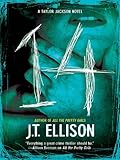
 by J. T. Ellison is bargain priced as an ebook for a short time at $1.99. This one barely qualifies to appear hear, but I bought it myself since it is set in my hometown of Nashville and it features a Snow White killer. So Nashville and a fairy tale named killer is enough to part me from $1.99! This is the second book in the series. The first and third, listed below, are also bargain priced temporarily.


 is still out of print and the used copies are selling for crazy prices that Lee will never see a cent for anyway. This book needs to be back in print! One of the top joys of ebooks is that they don't go out of print, can be around forever for purchase and the authors can still receive royalties for them. Everyone wins in that scenario, except used booksellers (sorry to them!). I own a hardcover myself so I cannot complain, but this would be a top recommendation for me if it was more readily available to all of you.