Tuesday, October 11, 2011

The Orphan: A Cinderella Story from Greece by Anthony Manna and Christodoula Mitakidou


The Orphan: A Cinderella Story from Greece by Anthony Manna and Christodoula Mitakidou and illustrated by Giselle Potter is released today.

Book description from the publisher:

Once upon a time in Greece, fate left a young girl an orphan. Her stepmother was so hateful that she counted every drop of water the orphan drank! But with the help of Nature's blessings, the orphan was showered with gifts: brilliance from the Sun, beauty from the Moon, gracefulness from the Dawn—and even a tiny pair of blue shoes from the Sea. When the prince comes to visit their village, he only has eyes for the mysterious beauty. Children will love this fanciful folk retelling of the Cinderella story, accompanied by luminous watercolor illustrations by Giselle Potter.

About the Authors

ANTHONY L. MANNA and SOULA MITAKIDOU's first collaboration, Mr. Semolina-Semolinus: A Greek Folktale, illustrated by Giselle Potter, was an ALA-ALSC Notable Children's Book, and a New York Public Library Best Book for Children. Anthony has taught at universities in Turkey, Greece, and the U.S. Soula grew up in Greece, and storytelling was an important part of her family's traditions. She now lives in Thessaloniki, Greece, where she teaches at Aristotle University.

GISELLE POTTER's children's books include The Boy Who Loved Words by Roni Schotter, a Parents' Choice Gold Award winner; and Kate and the Beanstalk by Mary Pope Osborne, a Publishers Weekly and School Library Journal Best Book and an ALA-ALSC Notable Children's Book. Giselle lives in New York's Hudson Valley with her husband and daughters. Visit her at GisellePotter.com.

Monday, October 10, 2011

Library Essentials Month: Fairytale in the Ancient World by Graham Anderson


Fairytale in the Ancient World by Graham Anderson is a deceptively slim book. This is the first of the books that I have listed as a library essential that was released a few years after I started SurLaLune. I remember reading it and thinking, oh, so much I'd love to add to SurLaLune!
Description from the publisher:

In this, the first modern study of the ancient fairytale, Graham Anderson asks whether the familiar children's fairytale of today existed in the ancient world. He examines texts from the classical period and finds many stories which resemble those we know today, including:

* a Jewish Egyptian Cinderella
* a Snow White whose enemy is the goddess Artemis
* a Pied Piper at Troy.

He puts forward many previously unsuspected candidates as classical variants of the modern fairytale and argues that the degree of violence and cruelty in the ancient tales means they must have been meant for adults.

My own review from 2003 is still up on Amazon, the only one there to date:

Having had this book in my personal collection for a few years now, I cannot praise it highly enough. As any folklorist knows, similar story threads exist across cultures and time. Why does this happen? One influence may have been the classic mythology from the Greeks and Romans. Graham Anderson makes reasonable connections between classical literature and our more modern folklore in previously unexplored ways. His writing is concise with easy-to-follow descriptions and analysis. If you are interested in the history of story, folklore, or the classics, this book is an excellent and relatively quick read. I only wish I had owned this book in the days when I was studying the classics as an undergraduate. It would have made reading the classics even more interesting than it was then.
That pretty much sums it up. I regularly reference this book when considering fairy tale variants or themes. No, many of these old myths are not necessarily directly related to our modern fairy tales, but the commonality of themes and plot devices is impressive. This one makes you think and it makes you want to return to classic mythology--especially when you realize how much you may have missed of mythology. I have an English degree which partially focused on the Greek and Roman classics and I missed much of these stories.

Best yet, many of the most popular fairy tales are found in these pages, from Cinderella to Little Red Riding Hood to Snow White and others, there is some fascinating reading in this short book. When Fairy Tales from Before Fairy Tales: The Medieval Latin Past of Wonderful Lies by Jan M. Ziolkowski hit my own shelves, I was unfair to it because I wanted it to be more like Fairytale in the Ancient World. It is also a fine book with extensive discussion of lesser known tales, but I rarely return to it the same way I return over and over again to Fairytale in the Ancient World.

No More Adventures in Wonderland by Maria Tatar


Speaking of the dark (see my previous post), Maria Tatar had an op-ed piece in the New York Times over the weekend about the dark in children's literature.

From No More Adventures in Wonderland by MARIA TATAR:

J. M. Barrie’s Neverland, like Lewis Carroll’s Wonderland before it, delivers on the luminous promise of magic, with fairy dust and rainbow water, in a world ablaze with color and expressive energy. Yet the authors of “Peter Pan” and “Alice’s Adventures in Wonderland” also understood that “what if?” had a dark side: the Queen of Hearts ritually demands nearly everyone’s head and Captain Hook repeatedly brandishes his trademark weapon, while a clock ticking inside a crocodile reminds us that time is running out.

These are the traditional villains of children’s books — fabulous monsters with a touch of the absurd. Like Maurice Sendak’s Wild Things and countless others, they walk a fine line between horror and zany eccentricity. They may frighten young readers, but their juvenile antics strip them of any real authority. Alice shrieks with delight when she learns that the Duchess has boxed the Queen’s ears and shouts words like “Nonsense!” to banish threats, while Peter triumphs over a pirate who undermines himself by worrying about “good form” and then resorting to childish practices like biting.

Many authors of more recent books for children and teenagers have similarly crossed over to the dark side, and we applaud them for it. But the savagery we offer children today is more unforgiving than it once was, and the shadows are rarely banished by comic relief. Instead of stories about children who will not grow up, we have stories about children who struggle to survive.

You'll have to click through to read more and Tatar's final opinions, but it is certainly worth the time. Feel free to come back here and share any thoughts.

Upcoming Film: Black Forest: Hansel and Gretel and the 420 Witch


Bits and pieces from Indies light up 'The 420 Witch': Duane Journey directing stoney take on Hansel and Gretel tale by Jeff Sneider at Variety:

With Paramount wrapping its Jeremy Renner starrer "Hansel and Gretel: Witch Hunters," three indie companies are prepping an alternate take on the Grimm brothers' classic fairy tale titled "Black Forest: Hansel and Gretel and the 420 Witch."

Duane Journey will direct from David Tillman's script, which concerns a witch living in Pasadena who lures teens into her house with a special blend of marijuana so she can eat them in order to maintain her youth.

"Twilight" thesp Michael Welch and "Castle" star Molly Quinn will play the endangered siblings, with Lara Flynn Boyle ("Men in Black II") as the sinister witch.

"'420 Witch' is not your average fairy-tale adaptation. It's a reinvention of the story with a dark edge that I think audiences will love," Hudson said.

Dark edged fairy tale retelling? Yep, that's new and cutting edge. (Snort.) But this one goes into production next month so it's an almost definite coming to you in the future unlike some of the other smaller projects we see. And I admit to liking Molly Quinn on Castle, so that could be interesting, too.

While I admit I wasn't overwhelmed with some of the Lily Collins' Snow White imagery, I think I prefer it to so many of these "How dark can we get?" trends right now. Yes, fairy tales are dark, but they are also usually hopeful. When the emphasis is on the bleak and scary, I wonder if we lose some of the magic, too? That said, Hansel and Gretel is one of the scariest fairy tales of all, so a horror interpretation is not far off the mark.

Sunday, October 9, 2011

Library Essentials: Touch Magic by Jane Yolen


Touch Magic by Jane Yolen is today's library essential. No, this one isn't as much for research and learning about fairy tales, although you may certainly learn something. But why I love this book is how eloquently and thoroughly Yolen discusses the power of fairy tales and folklore, why they are important. This book is for fairy tale apologists. It inspires and puts into words many of the thoughts and feelings you may have already had but couldn't get out.

After all, Yolen has been working with folklore for decades and has faced the same looks and derision and misunderstanding we all do if we work with fairy tales or children's literature, too. When people ask me what I do--such an American question--and I say fairy tales, well, the confusion and derision is often quite palatable. It's not secret and I am quite proud of it, but if the circumstances are such, I avoid the question. Most people in my circle of real world life don't understand the power and legacy of fairy tales or even folklore. I wish I could assign them all this book to read.

But as for me, it reminds me why I love this realm and why I keep doing this work. The good news is that Harry Potter and the movement he spawned have made fantasy much more acceptable and mainstream, so this book is now preaching to a larger choir. But fairy tales are still a negative term and the stuff of childish fantasy to too many. And as we know, if they only knew, they'd be banning them from children instead. So perhaps it is good they don't know....

From the publisher:

“Our children are growing up without their birthright: the myths, fairy tales, fantasies and folklore that are their proper legacy.” The essays in Touch Magic, Jane Yolen's classic call-to-arms advocating the use of fantasy and folklore in children's literature, echo that statement. Yolen argues persuasively that fantasy, folklore, and the realm of story provide children with the necessary tools for facing the world, understanding its ways and capriciousness—indeed, becoming truly human....

“I believe that culture begins in the cradle.” she writes. “To do without tales and stories and books is to lose humanity's past, is to have no star map for our future.” August House now offers a richly expanded version of this seminal volume. With six new essays that tender fresh perspectives on the morality of fairy tales, time travel, the definition of story—and of course, why such themes are essential to the development of today's children—Touch Magic heralds a new millennium of fantasy, myth, and storytelling. “Story is our wall against the dark,” Yolen contends, and as adults, we must equip our children with story in order to keep them linked with the past and ready for the future. Touch magic, and pass it on.

Saturday, October 8, 2011

Library Essentials Month: Andrew Lang's Colored Fairy Books


Blue Fairy Book edited by Andrew Lang illustrated by H. J. Ford  Red Fairy Book edited by Andrew Lang illustrated by H. J. Ford  Green Fairy Book edited by Andrew Lang illustrated by H. J. Ford  Yellow Fairy Book edited by Andrew Lang illustrated by H. J. Ford

Today's library essential is pretty much a library unto itself, but easily "owned" by every reader here. As you can see, I am talking about Andrew Lang's famous collection of 12 books in his Colored Fairy Book series. I won't list them all here, just provide covers and links to print versions from Dover at Amazon. I own all of these books and they sit within easy reach on my shelf despite their ready availability on the internet.

This series was multicultural a century before that word was used so imperatively. It also--even a hundred years later--has tales that haven't been translated into English anywhere else. Then there are the wonderful illustrations by Henry Justice Ford and G. P. Jacomb Hood.

Pink Fairy Book edited by Andrew Lang illustrated by H. J. Ford  Grey Fairy Book edited by Andrew Lang illustrated by H. J. Ford  Violet Fairy Book edited by Andrew Lang illustrated by H. J. Ford  Crimson Fairy Book edited by Andrew Lang illustrated by H. J. Ford

Then there's the secret knowlege that much of this series was translated and edited by women despite Andrew Lang's name on the cover. He was the big name and had brand recognition so his name is on the cover, but his wife and other women were the primary editors and translators. He often acknowledges them as such in his introductions.

Brown Fairy Book edited by Andrew Lang illustrated by H. J. Ford  Orange Fairy Book edited by Andrew Lang illustrated by H. J. Ford  Olive Fairy Book edited by Andrew Lang illustrated by H. J. Ford  Lilac Fairy Book edited by Andrew Lang illustrated by H. J. Ford

The colored fairy books were the introduction to fairy tales for several generations and are still fairly well known today. I see random references to them in other books--just this past week a character in a book I was skimming kept referring to the Green Fairy Book.

But in the end, the treasure trove of hundreds of tales from around the world gathered into this small library is a wonder and an essential in my library. You can see the old editions on Google Books, even download PDFs of the scans, or find editions on Gutenberg, or if you need a quick list and sorting capabilities of the entire library, I recommend the collection at Mythfolklore.net. The illustrations aren't there, but you can sort the text by author, country, book, etc.

So that's an easy addition to your own folklore library. Makes up for some of the more expensive titles I'll still be featuring this month.

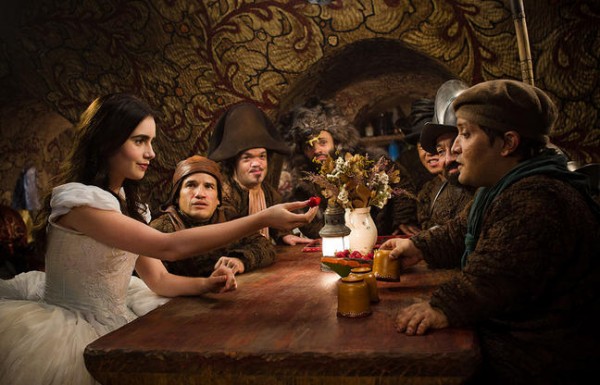
Photo Stills from the Lily Collins Snow White (2012)


So there's been a media blitz the last few days of images from the upcoming Snow White starring Lily Collins. So I thought I would share. This one is definitely aiming to be the antithesis of the Kristen Stewart version which will compete practically head to head with it. This one, as yet untitled, will be released March 16, 2012.

What do you think of these costumes? I'm seeing an Oscar nod, to be sure. The designer is Oscar-winning costume designer Eiko Ishioka (Bram Stoker’s Dracula), so that isn't a stretch of the imagination. All of this reminds me of the second (first?) Star Wars trilogy when Amidala and her retinue were given grand and large to wear but without an Oriental influence this time. Although I keep thinking of Bjork when I see that atrocious swan headpiece. I collect and wear hats, folks. I put a lot of things on my head no one else would imagine. But that swan, never!


From Entertainment Weekly which tells a little more than I blockquote here:

It’s at this ball where Snow White (Abduction‘s Lily Collins) infiltrates the court in hopes of persuading a prince (The Social Network’s Armie Hammer) to help her overthrow the murderous usurper. However the queen has already set her cougar eyes on him.

The script, originally by Melisa Wallack, was rewritten by Jason Keller who recently did Machine Gun Preacher, (so expect a little more edge than the Disney take on this material.)

Like many evil-doers, this queen maintains a phony cheerful demeanor in public, and prefers not to get her own hands dirty with such menial issues as murdering her step-daughter, which is the only way to maintain her place on the throne. “She outsources her evil, just like most people,” says Tarsem. “I wanted a person who is just schizophrenic. She’s a person who would just do all the evil she needs to do to stay in power.”

Luckily for Snow White, that means she can remain undetected for a while and attempt to unseat the woman who is destroying her late father’s kingdom.

She has some helpers, of course. Seven of them.


Friday, October 7, 2011

Library Essentials Month: The Bloody Chamber: And Other Stories by Angela Carter


It's Friday so today's library essential is a fiction book, The Bloody Chamber: And Other Stories by Angela Carter. If it isn't the number one most referenced fairy tale related fiction, it's certainly in the top five. The Bloody Chamber is a collection of short stories by Carter interpreting fairy tales for an adult audience. It is not light reading. It is not easy reading on the emotional level at all, although the prose itself is very readable. Carter's work has been studied over and over again and will continue to be so. This book continues to influence fiction writers who play with fairy tales, too, directly and indirectly.

I had heard of the book and was strongly recommended it by my mentor when I was finishing high school. It was a shocking experience--not comfortable at all--when I finally read it and I was glad it had taken me a few years to find it. (I was a young student and ignorant of interlibrary loans or special ordering. I grabbed the book when I finally saw it sitting oh so casually on a bookstore shelf.)

The title story, "The Bloody Chamber," is a Bluebeard retelling and the version that most impacts my own impressions of the tale. It is why I first annotated Bluebeard when SurLaLune was in its conceptual stage instead of choosing my beloved Beauty and the Beast instead.

Anyway, this is a slim volume and easily accessed these days. If you are serious about fairy tales in modern times, you need to be familliar with this book. It's dark. It's gloomy. It's not my usual taste, but it cannot be missed.

And once you've read it, there is a ton of scholarship out there to find including Angela Carter and the Fairy Tale (Marvels & Tales Special Issues). If you don't own either, I'd order both at the same time. It just saves time and shipping.