FedAs always, a much longer article. Click through to read the entire thing.
Up so long and variously by
Our age's fancy narrative concoctions,
I yearned for the kind of unseasoned telling found
In legends, fairy tales, a tone licked clean
Over the centuries by mild old tongues,
Grandam to cub, serene, anonymous.
So my narrative
Wanted to be limpid, unfragmented;
My characters, conventional stock figures
Afflicted to a minimal degree
With personality and past experience –
A witch, a hermit, innocent young lovers,
The kinds of being we recall from Grimm,
Jung, Verdi, and the commedia dell'arte.
So writes the American poet James Merrill at the opening of "The Book of Ephraim", the first part of his extraordinary long poem The Changing Light at Sandover (1982). Discussing the way in which he hopes to tell a story of his own, he singles out two of the most important characteristics of the fairy tale, as he sees it: the "serene, anonymous" voice in which it's told, and the "conventional, stock figures" who inhabit it.
When Merrill mentions "Grimm", he needs to say no more: we all know what he means. For most western readers and writers in the past two hundred years, the Kinder- und Hausmärchen (Children's and Household Tales) of the Brothers Grimm has been the fountain and origin of the western fairy tale, the greatest collection, the most widely distributed in the largest number of languages, the home of all we feel to be unique in that kind of story.
Monday, September 24, 2012
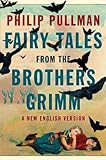
The challenge of retelling Grimms' fairy tales by Philip Pullman
Tuesday, May 11, 2010
Siphon in the OED
I don't know if you've seen this yet today, but it makes for interesting conversation, For 99 Years, Oxford English Dictionary Got It Wrong:
The Oxford English Dictionary got it wrong, and it took 99 years before anyone noticed.You can read another version of the article at QUT physicist corrects Oxford English Dictionary.
Siphons don't work, it turns out, because of atmospheric pressure, as the OED has been saying since 1911. It's all down to that law Isaac Newton figured out when an apple hit his head: g-r-a-v-i-t-y.
Siphons work by drawing fluids from a higher location to a lower one, not always an easy thing to do, as anyone who's tried to empty a car's gas tank would confirm.
"It is gravity that moves the fluid in a siphon," said Stephen Hughes, a physics lecturer at the University of Technology in Brisbane, Australia.
So he was stunned when he noticed the OED had made a mistake, telling The Daily Telegraph of London, "We would all have an issue if the dictionary defined a koala as a species of bear, or a rose as a tulip."
Not folklore related, but an interesting debate over the reliability of information which can be folklore related in its own way. And funnily enough, I remember being taught that it was atmospheric pressure at some point. I don't know if this is just a common misconception or something perpetuated by the incorrect dictionaries. If you read the article, others get it wrong presumably since they consult the OED, too.
And can you imagine the extra fuel for the debates over using Wikipedia as a source now? We'll hear: "The venerable OED isn't always right either! Wikipedia appears to describe siphon correctly."
Tuesday, January 12, 2010
Food For Thought: Fantasy Worlds and Depression
On the slant, but this caught my eye this evening: Does Watching "Avatar" Lead to Depression? by Deborah Huso
Hundreds of fans of James Cameron's hit film "Avatar," which has raked in $1.4 billion, are reporting symptoms of depression as well as suicidal thoughts after seeing the movie. The film is set in the future when the Earth's resources have been depleted and a corporation is looking to mine the natural resources of a planet called, Pandora, which is portrayed as a world of beauty, with inhabitants that are close to nature and all creatures are connected. Many attribute their depression to the fact that the utopian world shown in the movie is unattainable here on earth and makes life seem meaningless.
and more...
Crazy as it may sound at first, feeling blue after engaging in some form of escapism, whether it's an especially touching movie or a great book, isn't unusual. But if it's impacting your ability to function, you could be taking escapism to the extreme. Escapism on that level can be a symptom of all kinds of problems from anxiety disorder to clinical depression.
“If a person has such an inordinate attraction to fantasy material and is prevented access to it, frustration, stress, anxiety or depression might possibly result,” said Frank Farley, Ph.D., a professor of educational psychology at Temple University in Philadelphia. “Modeling or identifying with media depictions is not unknown,” he added. “Yet most people make the distinction of reality versus fantasy.”
So does that make Avatar a new fairy tale in the pop culture sense, the one in which the label 'fairy tale' implies idyllic, perfect existence? Just do a news search to see how overused the term is in articles about romances and weddings, sports and politics.
Of course, except for the usual happy endings, we know that the real fairy tales are anything but idyllic, but rather violent and scary with only the hope of a happily ever after ending. It's always fun to compare the public perception versus the reality of what's in the tales, at least the earlier versions before they were made safer for the nursery.
Also applicable since so many of us fairy tale enthusiasts are also lovers of fantasy and science fiction in general. Although I admit I haven't seen Avatar yet and am not really very interested in it despite several rather enthusiastic endorsements from friends. My loss, I know, but I have become insanely picky about movies of late.
Edited: Noticed a few minutes after posting that this is my 350th post. Chugging right along...
Tuesday, October 20, 2009
Changing Endings...
Found this article at the Telegraph about changing the endings of traditional children's stories: BBC gives nursery rhymes a fairytale ending by Paul Stokes
According to recent broadcasts, Humpty Dumpty was not irreparably damaged in his great fall and Little Miss Muffet has no particular fear of spiders.
The examples have been picked up in recent programmes on the network's CBeebies children's channel.
Last Friday's Something Special, aimed at children with special needs but popular with all under-fives, included a singalong feature in which the lyrics were changed.
Instead of all the King's horses and all the King's men being unable to put him together again, they "made Humpty happy again".
Tom Harris, Labour MP for Glasgow South, who watched the show with his sons aged five and three, described the re-worked version as "pathetic".
He was also critical of a previous episode of Big Cook Little Cook in which Little Miss Muffet welcomes a spider that sits down beside her.
And this is the BBC's response also from the article:
The BBC defended its decision to change the words which it says was for "creative" reasons and not to sanitise the rhymes.
A spokeswoman pointed out that the nursery rhymes in their original form were maintained in full on the CBeebies website.
The article also linked back to a January 2009 article: Traditional fairytales 'not PC enough': Parents have stopped reading traditional fairytales to their children because they are too scary and not politically correct, according to research.
Favourites such as Snow White and the Seven Dwarfs, Cinderella and Rapunzel are being dropped by some families who fear children are being emotionally damaged.
A third of parents refused to read Little Red Riding Hood because she walks through woods alone and finds her grandmother eaten by a wolf.
One in 10 said Snow White should be re-named because "the dwarf reference is not PC".
Rapunzel was considered "too dark" and Cinderella has been dumped amid fears she is treated like a slave and forced to do all the housework.
The poll of 3,000 British parents - by TheBabyWebsite.com - revealed a quarter of mothers now rejected some classic fairy tales.
And the article ends with:
Top 10 fairy tales we no longer read:
1. Snow White and the Seven Dwarfs
2. Hansel and Gretel
3. Cinderella
4. Little Red Riding Hood
5. The Gingerbread Man
6. Jack and the Beanstalk
7. Sleeping Beauty
8. Beauty and the Beast
9. Goldilocks and the Three Bears
10. The Emperor's New Clothes
So where do you fall in the controversy? There is definitely no simple answer, to put it mildly. I'm not very upset with rewriting endings. It's been done for hundreds of years in oral tradition.
And don't we all adapt our stories to fit the needs or desires of our audience? I used to regularly drive a carpool of four girls ages 8-11 and they BEGGED me to share the "scary" versions of fairy tales each and every time they got in my car. I think one of the issues is that once children start reading on their own, they don't have family storytimes anymore. I don't read Hansel and Gretel to toddlers, but I think it's a story with a lot of discussion value for the five and older set.
And I see fairy tales as valuable in providing a common experience. With the internet and other medias, so many interests are getting split and splintered over and over again. Pop music isn't as widely spread with the increase of genres, for example, or the explosion of media outlets of all forms. We're losing other common experiences like tv show theme songs. We are inundated with book titles so that only the bestsellers have a chance of being known by a decent portion of the population. Fairy tales, however, can still be part of the common experience and thus common reference. Observe their constant usage in advertising and elsewhere to see their power. Of course I think children should learn about fairy tales, but at appropriate ages and times, not the scariest ones at a 2-year-old's bedtime.
Tuesday, October 13, 2009
The Guardian: Beware Fairy Stories

There is an additional article posted on The Guardian today, as a supplement to the fairy tale brochures I'm posting about all week. I decided to give it its own post since it is not from a brochure. It is also longer and discusses one of the most popular topics about fairy tales.
Adult content warning: Beware fairy stories by David Barnett: These tales of extreme violence and horror aren't really just 'kids' stuff', nor were they meant to be
But the deeper you venture into the dark woods of these fairytales, the more you have to wonder – are these stories really for kids?
The Disneyfication of fairy stories over the past 70-odd years since Uncle Walt released his animated take on Snow White and the Seven Dwarfs has put into most people's minds a primary-coloured world of beautiful people facing dastardly villains and apparently insurmountable obstacles on their path to a life of happiness alongside Mr or Ms (or, more likely, HRH) Right; a world where good always triumphs and there's no better relationship than one built upon the size of a kingdom. A world, largely, for children. But the picture painted by the Grimms was of a vast, dark, world-encompassing forest in which still darker deeds were committed – and went unpunished.
He also quotes from JRR Tolkien's On Fairy Stories:
"The association of children and fairy stories is an accident of our domestic history. Fairy stories have in the modern lettered world been relegated to the 'nursery', as shabby or old-fashioned furniture is relegated to the playroom, primarily because the adults do not want it, and do not mind if it is misused."
Barnett offers this conclusion with which I agree:
It would be a shame, though, if fairy stories – notwithstanding their origins as tales for grown-ups – were completely removed, in Tolkien's words, from the playroom. Sanitised and Disneyfied many modern versions may be, and the expectations of how life pans out they engender, especially among young girls, might not be completely desirable, but they do help to instil in children a sense of wonder that is vital for navigating the often dark and dense forest of adult life.
Be sure to read the entire article and then page down to the reader comments because the discussion is already going strong with the article freshly posted. There is the requisite Disney-bashing, too, which I usually find oversimplified. Not a criticism of Barnett, mind you, he doesn't really bash either.
I'm not a diehard fan, as we know, but I don't blame Disney for all of fairy tales' modern misconceptions either. There were sanitized versions of tales before Disney. "Fairy tale" as a term was also derogatory, implying "light fantasy" in culture at large before Disney, too. Researching fairy tales in the 19th century shows that. Their long history as women's and children's literature have brought about much of the misconceptions. Disney has not helped, has perpetuated the stigma on a greater scale, but is not the sole perpetrator.
Last week, when asked by a friend, I explained that I had just finished an article on the history of Snow White. "Oh, how cute!" she replied. There wasn't time to explain further, so I just smiled and wondered at myself for setting myself up again for such a response that is, well, condescending. If only she knew! As always, I had worked hard to balance the article to keep it from being maudlin and depressing. The tale's history includes child murder and cannibalism, still includes both most of the time. Some rarer variants even offer up polygamy. Now that's a popular topic, full of warm and fuzzy thoughts.
In the United States, we have virtually wiped out Donkeyskin and Bluebeard in popular culture although they were once much more recognized and remain better known in France. Catherine Deneuve's Peau d'ane has helped Donkeyskin stay in the French public conscious, for one.
Anyway, this is a topic that will always be with us. Here's another opportunity to discuss or a resource for the students wanting to write about it. SurLaLune welcomes countless numbers of those each year!
Thursday, August 27, 2009
Article: Why children’s stories should have happy endings
Found this article at WalesOnline.co.uk yesterday: Why children’s stories should have happy endings. This blog is mostly newsy in nature, but sometimes the opportunity arises for more thought or even discussion. You, dear readers, will decide that with your responses to this post, if there are any at all. This is my quick release of some festering thoughts of late, not well-organized and somewhat reactionary. That's my disclaimer. :)
First blockquote:
MODERN children’s stories rarely end with lashings of ginger ale and an assurance that everyone lived happily ever after.
The blue-skied Britain of Enid Blyton may bear little resemblance to modern Wales, but Welsh authors yesterday backed a call by former children’s laureate Anne Fine to balance realism with hope.
Speaking at the Edinburgh Book Festival, Ms Fine stunned an audience by suggesting that the backlash against children’s stories of the 1950s may have gone too far.
She said: “Books for children became much more concerned with realism, or what we see as realism.
“But where is the hope? How do we offer them hope within that?”
And her questions struck a chord with authors.
And, just to show that the article is even more pertinent to this fairy tales blog, it also offers this:
[The Rev Lionel Fanthorpe] said fiction should shine a “lantern of hope” into young lives and present “a hero who will be able to fight her way out” of crises, in the tradition of essayist and author GK Chesterton (1874-1936) who powerfully argued that parents should not stop telling fairy tales for fear of frightening their children.
Chesterton wrote: “Fairy tales do not give the child the idea of the evil or the ugly; that is in the child already because it is in the world already. What fairy tales give the child is his first clear idea of the possible defeat of bogey.
“The baby has known the dragon intimately ever since he had an imagination. What the fairy tale provides for him is a St George to kill the dragon.”
(And please, the second page of the article almost ruins the tone and message of the first page which has some interesting points. The "revisions" of the famous tragic stories, well, miss the entire point of the first page and come across as condescending. Especially since some of the originals offer the exact hope the authors are mentioning. Charlotte's Web is hopeless? Not to me. Sad, yes, hopeless, I don't think so. Romeo and Juliet as children's literature? Not on my planet. On another side note: One of my early influences, Madeleine L'Engle, managed to write some of the earliest hard-hitting stories for YA long before it was the trend and still infuse the stories with the hope that is missing so often today.)
I have more of Chesterton's thoughts on Fairy Tales on SurLaLune. And for those of you who are unaware of Anne Fine, stateside she is best known for penning Mrs. Doubtfire although she has many gems that have been popular in the UK, just not here. I met her briefly at Simmons College years ago and she was one of the most grounded and perhaps even jaded children's authors I've met as her body of work also illustrates. She is not one to hide in fantasies although humor is one of her favorite tools of the trade. So when she says our children's literature needs more hope, she's not into simple wish-fulfillment.
And just to be balanced here's already a rebuttal article that disagrees with Anne Fine and company: Children can handle much more realism than Anne Fine thinks. Granted, I've not seen Fine's full speech but I interpreted her words as a call for hope even in the bleakest stories. It's all up to interpretation, really, as any author can tell you happens once her words are sent out into the world. We all bring our own experience to our interpretations. Overall, I want more hope in my reading.
Now I've said before--and most of the readers here are sitting in choir seats--that traditional fairy tales are not happy little tales served Splenda-sweet--or popular with many detractors, Disney-style--even if most offer the hope of a happy future once trials are overcome. The tales are dark, violent, gruesome, unfair and often horrendous right up to the end. Then the end is overcome and "happily ever after" is offered up. This can be just as much as a storytelling device ending as "Once upon a time..." is a beginning. But the tale also shows how the hero(ine) overcame great adversity with mixtures of cunning, kindness, virtue, perseverance, penitence, serendipity, luck and help from others. The final "happily ever after" comes from knowing that even future adversity can be overcome with variations of the same recipe. There is hope offered up with the ending. (Cardinal rule of storytelling: Leave them smiling.)
Or at least that's the way I see it.
All this and fairy tales still remain controversial for being too dark, too light, too violent, too happy, unrealistic, magical, unfeminist, etc. And then there are the ones who think fairy tales begin and end with the Disney versions and condemn those as fantastical wish-fulfillment. Yes, fairy tales can hit so many sore spots and then the next tale can soothe the same wound into healing. That's their beauty and their curse.
I prefer the happy endings, especially in times like these when economic and other woes have caused more stress and heartache of late than most years of my life have seen. This time, too, shall pass. And isn't it nice that we have several fairy tales entering the pop culture awareness again through film and other sources?
P.S. More food for thought: Romance appears to once again be recession proof for similar reasons. And I enjoyed Meg Cabot's defense of romance a few months ago on her blog which was another response to the articles about dark YA literature. Read her here: Romance, Trauma Porn, and Brazil Dates! She includes links to more articles so I'll refrain here.