Showing posts with label ballads. Show all posts

Tuesday, August 28, 2012

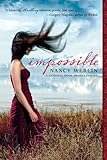
Bargain Book: Impossible by Nancy Werlin


Impossible by Nancy Werlin is temporarily bargain priced in paperback on Amazon for $4.00. It's not available in ebook format at all, so this is the only option for reading it.

Book description:

A beautifully wrought modern fairy tale from master storyteller and award-winning author Nancy Werlin.

Inspired by the classic folk ballad "Scarborough Fair," this is a wonderfully riveting and haunting novel of suspense, romance, and fantasy. Lucy is seventeen when she discovers that she is the latest recipient of a generations-old family curse that requires her to complete three seemingly impossible tasks or risk falling into madness and passing the curse on to the next generation. Unlike her ancestors, though, Lucy has family, friends, and other modern resources to help her out. But will it be enough to conquer this age-old evil?

I am always fascinated by novels inspired by ballads and Scarborough Fair is one of my favorites thanks to growing up listening to Simon and Garfunkle. I'm sure the song is going to earworm through my head all day today.

The reviews are very mixed on this book due to some content so you may read a few reviews and determine if the divisive issues discussed will affect your enjoyment of the book. I haven't read it myself but am interested. While the issues are very important to me--rape especially--I imagine their connection to folklore would probably lessen my own knee jerk reaction despite the modern setting.

Sunday, July 31, 2011

The Mermaid: Child Ballad 289


Mermaid and Other Water Spirit Tales From Around the World

One of the side benefits of working on the SurLaLune fairy tale anthologies is that I am becoming more familiar with various Child Ballads. While I enjoy ballads, they hadn't inspired much research on my part until the last few years. (There just isn't the time to do everything that interests me!)

I previously posted about Clerk Colvill, Child Ballad 42, which I enjoyed as I edited Mermaid and Other Water Spirit Tales From Around the World. The other ballad I included in the collected is Child 289 and I personally prefer it over Clerk Colvill. Most commonly known as The Mermaid, seven versions from Child appear in my book under various titles, including Greenland, The Seaman's Distress, and The Stormy Winds Did Blow. As I read it, Iwanted to listen to it, so I hunted some versions down on the internet.

Here's the text to Child 289B, which more closely resembles many of the modern recorded versions. Actually, most of them tend to be a hybrid of 289A, 289B and 289C. The ballad draws from the superstition that when sailors spy a mermaid, a shipwreck is imminent.

ONE Friday morn when we set sail,
Not very far from land,
We there did espy a fair pretty maid
With a comb and a glass in her hand, her hand, her hand,
With a comb and a glass in her hand.
While the raging seas did roar,
And the stormy winds did blow,
While we jolly sailor-boys were up into the top,
And the land-lubbers lying down below, below, below,
And the land-lubbers lying down below.

Then up starts the captain of our gallant ship,
And a brave young man was he:
“I’ve a wife and a child in fair Bristol town,
But a widow I fear she will be.”
For the raging seas, etc.

Then up starts the mate of our gallant ship,
And a bold young man was he:
“Oh! I have a wife in fair Portsmouth town,
But a widow I fear she will be.”
For the raging seas, etc.

Then up starts the cook of our gallant ship,
And a gruff old soul was he:
“Oh! I have a wife in fair Plymouth town,
But a widow I fear she will be.”

And then up spoke the little cabin-boy,
And a pretty little boy was he;
“Oh! I am more grievd for my daddy and my mammy
Than you for your wives all three.”

Then three times round went our gallant ship,
And three times round went she;
For the want of a life-boat they all went down,
And she sank to the bottom of the sea.

One of my favorite versions isn't a recording for purchase, but a homemade video on YouTube which I am embedding below. I enjoyed the simplicity of the tune and the variations it offered on the ballad itself. Here it is:


The Mermaid Song

As for recorded versions available for download, I preferred The Mermaid Song by the Floorbirds.

The Mermaid The Mermaid

Other versions you might prefer include The Mermaid by The Pirates of St. Piran and The Mermaid by Celtic Stew.

Monday, July 25, 2011

Clerk Colvill: A Mermaid Ballad


Mermaid and Other Water Spirit Tales From Around the World 

There are many ballads to be found in Mermaid and Other Water Spirit Tales From Around the World, including some Child Ballad variants of a few types. Today I wanted to focus on Clerk Colvill, a ballad with a few variants. In this one, the man is not an innocent victim, the following is from an introduction in a 1904 edition of Child's Ballads:
All the English versions are deplorably imperfect. Clerk Colvill is not, as his representative is or may be in other ballads, the guiltless and guileless object of the love or envy of a water-sprite or elf. It is clear that before his marriage with his gay lady he had been in the habit of resorting to this mermaid, and equally clear, from the impatient answer which he renders his dame, that he means to visit her again. His death is the natural penalty of his desertion of the water-nymph; for no point is better established than the fatal consequences of inconstancy in such connections. His history, were it fully told, would closely resemble that of the Knight of Staufenberg, as narrated in a German poem of about the year 1310. Clerk Colvill and the mermaid are represented by Sir Oluf and an elf in Scandinavian ballads to the number of about seventy. The oldest of these is derived from a Danish manuscript of 1550, two centuries and a half later than the Staufenberg poem, but two earlier than Clerk Colvill, the oldest ballad outside of the Scandinavian series (see Grundtvig, No. 47). The Breton ‘Seigneur Nann’ is closely akin to the Scandinavian versions, and the ballad has spread, apparently from Brittany, over all France (‘Jean Renaud’).

Clerk Colvill by Arthur Rackham

And now for one version of the ballad, Child 42B, Clerk Colvill:

1. CLERK COLVILL and his lusty dame
Were walking in the garden green;
The belt around her stately waist
Cost Clerk Colvill of pounds fifteen.

2. “O promise me now, Clerk Colvill,
Or it will cost ye muckle strife,
Ride never by the wells of Slane,
If ye wad live and brook your life.”

3. “Now speak nae mair, my lusty dame,
Now speak nae mair of that to me;
Did I neer see a fair woman,
But I wad sin with her body?”

4. He’s taen leave o his gay lady,
Nought minding what his lady said,
And he’s rode by the wells of Slane,
Where washing was a bonny maid.

5. “Wash on, wash on, my bonny maid,
That wash sae clean your sark of silk;”
“And weel fa you, fair gentleman,
Your body whiter than the milk.”

* * * * * * * * * * * * * * * * * * * *

6. Then loud, loud cry’d the Clerk Colvill,
“O my head it pains me sair;”
“Then take, then take,” the maiden said,
“And frae my sark you’ll cut a gare.”

7. Then she’s gied him a little bane-knife,
And frae her sark he cut a share;
She’s ty’d it round his whey-white face,
But ay his head it aked mair.

8. Then louder cry’d the Clerk Colvill,
“O sairer, sairer akes my head;”
“And sairer, sairer ever will,”
The maiden crys, “Till you be dead.”

9. Out then he drew his shining blade,
Thinking to stick her where she stood,
But she was vanishd to a fish,
And swam far off, a fair mermaid.

10. “O mother, mother, braid my hair;
My lusty lady, make my bed;
O brother, take my sword and spear,
For I have seen the false mermaid.”

Clerk Colvill by Henry Matthew Brock from Darvill's Rare Prints


Clerk Colvill by Henry Matthew Brock

Saturday, July 2, 2011

The Lord of Dunkerron


Mermaid and Other Water Spirit Tales From Around the World

Here's a ballad from Mermaid and Other Water Spirit Tales From Around the World for your Saturday...

Illustration by George Wharton Edwards


The Lord of Dunkerron

THE lord of Dunkerron—O’Sullivan More,
Why seeks he at midnight the sea-beaten shore?
His bark lies in haven, his bounds are asleep;
No foes are abroad on the land or the deep.

Yet nightly the lord of Dunkerron is known
On the wild shore to watch and to wander alone;
For a beautiful spirit of ocean, ’tis said,
The lord of Dunkerron would win to his bed.

When, by moonlight, the waters were hush’d to repose,
That beautiful spirit of ocean arose;
Her hair, full of lustre, just floated and fell
O’er her bosom, that heav’d with a billowy swell.

Long, long had he lov’d her—long vainly essay’d
To lure from her dwelling the coy ocean maid;
And long had he wander’d and watch’d by the tide,
To claim the fair spirit O’Sullivan’s bride!

The maiden she gazed on the creature of earth,
Whose voice in her breast to a feeling gave birth;
Then smiled; and, abashed as a maiden might be,
Looking down, gently sank to her home in the sea.

Though gentle that smile, as the moonlight above,
O’Sullivan felt ’twas the dawning of love,
And hope came on hope, spreading over his mind,
Like the eddy of circles her wake left behind.

The lord of Dunkerron he plunged in the waves,
And sought through the fierce rush of waters, their caves;
The gloom of whose depth studded over with spars,
Had the glitter of midnight when lit up by stars.

Who can tell or can fancy the treasures that sleep
Intombed in the wonderful womb of the deep?
The pearls and the gems, as if valueless, thrown
To lie ‘mid the sea-wrack concealed and unknown.

Down, down went the maid,—still the chieftain pursued;
Who flies must be followed ere she can be wooed.
Untempted by treasures, unawed by alarms,
The maiden at length he has clasped in his arms!

They rose from the deep by a smooth-spreading strand,
Whence beauty and verdure stretch’d over the land.
“Twas an isle of enchantment! and lightly the breeze,
With a musical murmur, just crept through the trees.

The haze-woven shroud of that newly born isle,
Softly faded away, from a magical pile,
A palace of crystal, whose bright-beaming sheen
Had the tints of the rainbow—red, yellow, and green.

And grottoes, fantastic in hue and in form,
Were there, as flung up—the wild sport of the storm;
Yet all was so cloudless, so lovely, and calm,
It seemed but a region of sunshine and balm.

“Here, here shall we dwell in a dream of delight,
Where the glories of earth and of ocean unite!
Yet, loved son of earth! I must from thee away;
There are laws which e’en spirits are bound to obey!

“Once more must I visit the chief of my race,
His sanction to gain ere I meet thy embrace.
In a moment I dive to the chambers beneath:
One cause can detain me—one only—’tis death!”

They parted in sorrow, with vows true and fond;
The language of promise had nothing beyond.
His soul all on fire, with anxiety burns:
The moment is gone—but no maiden returns.

What sounds from the deep meet his terrified ear—
What accents of rage and of grief does he hear?
What sees he? what change has come over the flood—
What tinges its green with a jetty of blood?

Can he doubt what the gush of warm blood would explain?
That she sought the consent of her monarch in vain!
For see all around him, in white foam and froth,
The waves of the ocean boil up in their wroth!

The palace of crystal has melted in air,
And the dies of the rainbow no longer are there;
The grottoes with vapour and clouds are o’ercast,
The sunshine is darkness—the vision has past!

Loud, loud was the call of his serfs for their chief;
They sought him with accents of wailing and grief:
He heard, and he struggled—a wave to the shore,
Exhausted and faint, bears O’Sullivan More!

Kenmare, 27th April, 1825.

Source:


Croker, Thomas Crofton. Fairy Legends and Traditions of the South of Ireland. London: John Murray, 1828.

Thursday, June 30, 2011

The Mermaid of Galloway by Allan Cunningham


Mermaid and Other Water Spirit Tales From Around the World The Mermaid Of Galloway

Mermaid and Other Water Spirit Tales From Around the World (still discounted to $31.57) has the full ballad of The Mermaid of Galloway by Allan Cunningham that I mentioned in my earlier Mermaid Music and $2 Off Today Only when I recommended Emily Smith's vesion, The Mermaid Of Galloway. So I thought I would share it here today. Please note that Smith's is modernized somewhat, but that is often a boon to modern listeners.


The Mermaid of Galloway
by Allan Cunningham


THERE’S a maid has sat on the green merse side
These ten lang years and mair;
An’ every first night o’ the new moon
She kames her yellow hair.

An’ ay while she sheds the yellow burning gowd,
Fu’ sweet she sings an’ hie,
Till the fairest bird that wooes the green wood,
Is charm’d wi’ her melodie.

But wha e’er listens to that sweet sang,
Or gangs the dame to see,
Ne’er hears the sang o’ the laverock again,
Nor wakens an earthly ee.

It fell in about the sweet simmer month,
I’ the first come o’ the moon,
That she sat o’ the tap of a sea-weed rock,
A-kaming her silk-locks down.

Her kame was o’ the whitely pearl,
Her hand like new-won milk;
Her breasts were all o’ the snawy curd,
In a net o’ sea-green silk.

She kamed her locks owre her white shoulders,
A fleece baith bonny and lang;
An’ ilka ringlet she shed frae her brows,
She raised a lightsome sang.

I’ the very first lilt o’ that sweet sang,
The birds forsook their young;
An’ they flew i’ the gate o’ the grey howlet,
To listen the sweet maid’s song.

I’ the second lilt o’ that sweet sang,
Of sweetness it wes sae fu’;
The tod leap’d out frae the frighted lambs,
And dighted his red-wat mou’.

I’ the very third lilt o’ that sweet sang,
Red lowed the new-woke moon;
The stars drapped blude on the yellow gowan tap,
Sax miles that maiden roun’.

‘I hae dwalt on the Nith,’ quo’ the young Cowehill,
‘These twenty years an’ three,
But the sweetest sang e’er brake frae a lip,
Comes thro’ the green wood to me.

‘O is it a voice frae twa earthly lips,
Whilk makes sic melodie?
It wad wile the lark frae the morning lift,
And weel may it wile me.’

‘I dreamed a dreary thing, master,
Whilk I am rad ye rede;
I dreamed ye kissed a pair o’ sweet lips,
That drapped o’ red heart’s-blede.’

‘Come, haud my steed, ye little foot-page,
Shod wi’ the red gold roun’;
Till I kiss the lips whilk sing sae sweet,’
An’ lightlie lap he down.

‘Kiss nae the singer’s lips, master,
Kiss nae the singer’s chin;
Touch nae her hand,’ quo’ the little foot-page,
‘If skaithless hame ye ’d win.

‘O wha will sit on yere toom saddle,
O wha will bruik yere gluve;
An’ wha will fauld yere erled bride,
I’ the kindly clasps o’ luve?’

He took aff his hat, a’ gold i’ the rim,
Knot wi’ a siller ban’;
He seemed a’ in lowe wi’ his gold raiment,
As thro’ the green wood he ran.

‘The simmer-dew fa’s saft, fair maid,
Aneath the siller moon;
But eerie is thy seat i’ the rock,
Washed wi’ the white sea faem.

‘Come, wash me wi’ thy lilie white hand,
Below and aboon the knee;
An’ I’ll kame thae links o’ yellow burning gold,
Aboon thy bonnie blue ee.

‘How rosie are thy parting lips,
How lilie-white thy skin,
An’ weel I wat thae kissing een
Wad tempt a saint to sin.’

‘Tak aff thae bars an’ bobs o’ gold,
Wi’ thy gared doublet fine;
An’ thraw me aff thy green mantle,
Leafed wi’ the siller twine.

‘An’ all in courtesie, fair knight,
A maiden’s love to win;
The gold lacing o’ thy green weeds
Wad harm her lilie skin.’

Syne coost he aff his green mantle,
Hemm’d wi’ the red gold roun’;
His costly doublet coost he aff
Wi’ red gold flow’red down.

‘Now ye maun kame my yellow hair,
Down wi’ my pearlie kame;
Then rowe me in thy green mantle,
An’ take me maiden hame.

‘But first come take me ’neath the chin,
An’ syne come kiss my cheek;
An’ spread my hanks o’ wat’ry hair,
I’ the new-moon beam to dreep.’

Sae first he kissed her dimpled chin,
Syne kissed her rosie cheek;
And lang he wooed her willin’ lips,
Like heather-hinnie sweet!

‘O! if ye’ ll come to the bonnie Cowehill,
’Mang primrose banks to woo,
I’ll wash thee ilk day i’ the new-milked milk,
An’ bind wi’ gold yere brow.

‘An’ a’ for a drink o’ the clear water
Ye ’se hae the rosie wine,
An’ a’ for the water white lilie,
Ye ’se hae these arms o’ mine.’

‘But what ’ll she say, yere bonnie young bride
Busked wi’ the siller fine,
Whan the rich kisses ye kept for her lips,
Are left wi’ vows on mine?’

He took his lips frae her red-rose mou’,
His arms frae her waist sae sma’;
‘Sweet maiden, I’m in bridal speed,
It’s time I were awa’.

‘O gie me a token o’ luve, sweet May,
A leal luve-token true;’
She crapped a lock o’ yellow golden hair,
An’ knotted it roun’ his brow.

‘O tie nae it sae strait, sweet May,
But with luve’s rose-knot kind;
My head is full of burning pain,
O saft ye maun it bind.’

His skin turned all o’ the red-rose hue,
Wi’ draps o’ bludie sweat;
An’ he laid his head ’mang the water lilies:
‘Sweet maiden, I maun sleep.’

She tyed ae link of her wet yellow hair,
Aboon his buruing bree;
Amang his curling haffet locks
She knotted knurles three.

She weaved owre his brow the white lilie,
Wi’ witch-knots mae than nine;
‘Gif ye were seven times bridegroom owre,
This night ye shall be mine.’

O twice he turned his sinking head,
An’ twice he lifted his ee;
O twice he sought to loose the links
Were knotted owre his bree.

‘Arise, sweet knight, yere young bride waits,
An’ doubts her ale will sour;
An’ wistly looks at the lilie-white sheets,
Down spread in ladie bower.

‘An’ she has preened the broidered silk,
About her white hause-bane;
Her princely petticoat is on,
Wi’ gold can stan’ its lane.’

He faintlie, slowlie, turn’d his cheek,
And faintly lift his ee,
And he strave to loose the witching bands
Aboon his burning bree.

Then took she up his green mantle
Of lowing gold the hem;
Then took she up his silken cap,
Rich wi’ a siller stem;
An’ she threw them wi’ her lilie hand
Amang the white sea faem.

She took the bride ring frae his finger
An’ threw it in the sea;
‘That hand shall mense nae ither ring
But wi’ the will o’ me.’

She faulded him i’ her lilie arms,
An’ took her pearlie kame;
His fleecy locks trailed owre the sand
As she sought the white sea-faem.

First rose the star out owre the hill,
An’ neist the lovely moon;
While the beauteous bride o’ Galloway
Looked for her blythe bridegroom.

Lightlie she sang while the new moon rose,
Blythe as a young bride May,
Whan the New Moon lights her lamp o’ luve,
An’ blinks the bride away.

‘Nithsdale, thou art a gay garden,
Wi’ monie a winsome flower;
But the princeliest rose o’ that garden
Maun blossom in my bower.

‘O gentle be the wind on thy leaf,
And gentle the gloaming dew;
And bonnie and balmy be thy bud,
Of a pure and steadfast hue;
And she who sings this sang in thy praise,
Shall love thee leal and true.’

An’ ay she sewed her silken snood,
An’ sung a bridal sang;
But oft the tears drapt frae her ee,
Afore the grey morn cam’.

The sun leamed ruddie ’mang the dew,
Sae thick on bank and tree;
The plough-boy whistled at his darg,
The milk-may answered hie;
But the lovely bride o’ Galloway
Sat wi’ a tear-wet ee.

Ilk breath o’ wind ’mang the forest leaves—
She heard the bridegroom’s tongue,
And she heard the bridal-coming lilt
In every bird which sung.

She sat high on the tap tower stane,
Nae waiting May was there;
She loosed the gold busk frae her breast,
The kame frae ’mang her hair;
She wiped the tear-blobs frae her ee,
An’ looked lang and sair.

First sang to her the blythe wee bird,
Frae aff the hawthorn green:
‘Loose out the love curls frae yere hair,
Ye plaited sae weel yestreen.’

An’ the spreckled lark frae ’mang the clouds
Of heaven came singing down:
‘Take out the bride-knots frae yere hair
An’ let these lang locks down.’

‘Come, bide wi’ me, ye pair o’ sweet birds,
Come down and bide wi’ me;
Ye sall peckle o’ the bread an’ drink o’ the wine,
And gold yere cage sall be.’

She laid the bride-cake ’neath her head,
An’ syne below her feet;
An’ laid her down ’tween the lilie-white sheets,
An’ soundlie did she sleep!

It seemed i’ the mid-hour o’ the night,
Her siller-bell did ring;
An’ soun’t as if nae earthlie hand
Had pou’d the silken string.

There was a cheek touch’d that ladie’s,
Cauld as the marble stane;
An’ a hand cauld as the drifting snaw
Was laid on her breast-bane.

‘O cauld is thy hand, my dear Willie,
O cauld, cauld is thy cheek;
An’ wring these locks o’ yellow hair,
Frae which the cauld draps dreep.’

‘O seek anither bridegroom, Marie,
On these bosom-faulds to sleep;
My bride is the yellow water lilie,
Its leaves my bridal sheet!’

Originally published in 1810.

Source:
Cunningham, Allan. Poems and Songs. London: John Murray, 1847.

Wednesday, May 25, 2011

Bluebeard and the Child Ballads


Bluebeard Tales From Around the World

Bluebeard Tales From Around the World also contains several Child Ballads. Why? Here's an excerpt from my introduction:


The second section of this collection is comprised of many of Child’s ballads classified commonly as Child Ballad 4: Lady Isabel and the Elf-Knight which fits most comfortably in the ATU 955 classification, but not perfectly. This is not the most accurate name for this family of ballads found in many areas across Europe, but it is the most convenient thanks to Child’s influence. This ballad group is considered to be one of the largest. Over the many decades of folklore scholarship, connections and relations between this ballad family and Bluebeard variants have been discussed. While some scholars believe the connections between the tales and the ballads to be tenuous, there are also many who consider them to be closely related despite their differences. While it is certainly debatable how much Perrault’s Bluebeard was influenced by the ballad group, it is easier to suppose a relation between it and many of the literary tales, especially those classified as ATU 311 and ATU 955. Francis Child makes the following point in his discussion of the ballad group:

In places where a ballad has once been known, the story will often be remembered after the verses have been wholly or partly forgotten, and the ballad will be resolved into a prose tale, retaining, perhaps, some scraps of verse, and not infrequently taking up new matter, or blending with other traditions. Naturally enough, a ballad and an equivalent tale sometimes exist side by side.
Child offers examples of this phenomenon by referencing several works including that of Anton Birlinger whose three Bluebeard related tales have been newly translated for this collection.
Despite whichever theory dominates, the ballads bear some comparison to the Bluebeard tales and so representative examples are provided here for just such an exercise. Unfortunately, the examples are from the United Kingdom and North America since the oldest known versions, especially the Dutch “Ballad of Heer Halewijn,” are not readily available in English translation. However, a prose version of the tale from Belgium is given as “Wine-Crust, the Blue-Beard of Flanders” in this collection. To learn more about the ballad group, I highly recommend Holger Olof Nygard’s book, The Ballad of Heer Halewijn (1958).
And since we are here, I will share one of the ballads, May Colven, variant 4C:

1. FALSE Sir John a wooing came
To a maid of beauty fair;
May Colven was this lady’s name,
Her father’s only heir.

2. He wood her butt, he wood her ben,
He wood her in the ha,
Until he got this lady’s consent
To mount and ride awa.

3. He went down to her father’s bower,
Where all the steeds did stand,
And he’s taken one of the best steeds
That was in her father’s land.

4. He’s got on and she’s got on,
And fast as they could flee,
Until they came to a lonesome part,
A rock by the side of the sea.

5. “Loup off the steed,” says false Sir John,
“Your bridal bed you see;
For I have drowned seven young ladies,
The eight one you shall be.

6. “Cast off, cast off, my May Colven,
All and your silken gown,
For it’s oer good and oer costly
To rot in the salt sea foam.
7. “Cast off, cast off, my May Colven,
All and your embroiderd shoen,
For they’re oer good and oer costly
To rot in the salt sea foam.”

8. “O turn you about, O false Sir John,
And look to the leaf of the tree,
For it never became a gentleman
A naked woman to see.”

9. He turnd himself straight round about,
To look to the leaf of the tree;
So swift as May Colven was
To throw him in the sea.

10. “O help, O help, my May Colven,
O help, or else I’ll drown;
I’ll take you home to your father’s bower,
And set you down safe and sound.”

11. “No help, no help, O false Sir John,
No help, nor pity thee;
Tho seven king’s-daughters you have drownd,
But the eight shall not be me.”

12. So she went on her father’s steed,
As swift as she could flee,
And she came home to her father’s bower
Before it was break of day.

13. Up then and spoke the pretty parrot:
“May Colven, where have you been?
What has become of false Sir John,
That woo’d you so late the streen?

14. “He woo’d you butt, he woo’d you ben,
He woo’d you in the ha,
Until he got your own consent
For to mount and gang awa.”

15. “O hold your tongue, my pretty parrot,
Lay not the blame upon me;
Your cup shall be of the flowered gold,
Your cage of the root of the tree.”


16. Up then spake the king himself,
In the bed-chamber where he lay:
“What ails the pretty parrot,
That prattles so long or day?”

17. “There came a cat to my cage door,
It almost a worried me,
And I was calling on May Colven
To take the cat from me.”

Tuesday, May 24, 2011

The Outlandish Knight: Child Ballad 4E


Bluebeard Tales From Around the World

I included several Child Ballads in Bluebeard Tales From Around the World. For the reasons, stay tuned tomorrow. Since I am late posting today, I thought I would simply share one of the ballads, Child Ballad 4E, from Scotland:

The Outlandish Knight

1. AN outlandish knight came from the north lands,
And he came a-wooing to me;
He told me he’d take me unto the north lands,
And there he would marry me.

2. “Come, fetch me some of your father’s gold,
And some of your mother’s fee,
And two of the best nags out of the stable,
Where they stand thirty and three.”

3. She fetched him some of her father’s gold,
And some of her mother’s fee,
And two of the best nags out of the stable,
Where they stood thirty and three.

4. She mounted her on her milk-white steed,
He on the dapple grey;
They rode till they came unto the sea-side,
Three hours before it was day.

5. “Light off, light off thy milk-white steed,
And deliver it unto me;
Six pretty maids have I drowned here,
And thou the seventh shalt be.
6. “Pull off, pull off thy silken gown,
And deliver it unto me;
Methinks it looks too rich and too gay
To rot in the salt sea.

7. “Pull off, pull off thy silken stays,
And deliver them unto me;
Methinks they are too fine and gay
To rot in the salt sea.

8. “Pull off, pull off thy Holland smock,
And deliver it unto me;
Methinks it looks too rich and gay
To rot in the salt sea.”

9. “If I must pull off my Holland smock,
Pray turn thy back unto me;
For it is not fitting that such a ruffian
A naked woman should see.”

10. He turned his back towards her
And viewed the leaves so green;
She catched him round the middle so small,
And tumbled him into the stream.

11. He dropped high and he dropped low,
Until he came to the side;
“Catch hold of my hand, my pretty maiden,
And I will make you my bride.”

12. “Lie there, lie there, you false-hearted man,
Lie there instead of me;
Six pretty maids have you drowned here,
And the seventh has drowned thee.”

13. She mounted on her milk-white steed,
And led the dapple grey;
She rode till she came to her own father’s hall,
Three hours before it was day.

14. The parrot being in the window so high,
Hearing the lady, did say,
“I’m afraid that some ruffian has led you astray,
That you have tarried so long away.”


15. “Don’t prittle nor prattle, my pretty parrot,
Nor tell no tales of me;
Thy cage shall be made of the glittering gold,
Although it is made of a tree.”

16. The king being in the chamber so high,
And hearing the parrot, did say,
“What ails you, what ails you, my pretty parrot,
That you prattle so long before day?”

17. “It’s no laughing matter,” the parrot did say,
“That so loudly I call unto thee,
For the cats have got into the window so high,
And I’m afraid they will have me.”

18. “Well turned, well turned, my pretty parrot,
Well turned, well turned for me;
Thy cage shall be made of the glittering gold,
And the door of the best ivory.”

Saturday, May 7, 2011

The Story of Blue Beard: A Student's Ballad


Bluebeard Tales From Around the World

I included several poems in Bluebeard Tales From Around the World and one of the little surprises I found during my hunt was the following. Here it is excerpted from the book.

The Story of Blue Beard: A Student's Ballad

The following is a ballad written by an eighth grade student, a girl who participated in poetry classes conducted and written about by Nell Warden for an educational magazine, The American Schoolmaster, circa 1915. The piece was too charming to leave out of this anthology. It also demonstrates how Bluebeard was better known by children in the nineteenth century and beginning of the twentieth. Read the teacher’s notes at the end of the poem for more information.

NOW listen, friends, and I will tell
A tale of long ago,
Of Blue Beard with his bright blue hair,
And bright blue beard, you know.

A very wealthy man was he,
With chests of glittering gold,
And piles and piles of precious stones,
And piles of silver, cold.

But all his wealth did please him not,
For he did want a wife,
Said he, “Who’er will be my bride,
Shall labor not in life.

And she shall have my precious stones,
And all my silver, too;”
But none would wed this frightful man.
This man with beard of blue.

Now near Blue Beard a widow lived,
With two sweet daughters fair,
And Blue Beard wished to marry one,
For Fatima he did care.

“Oh come, sweet maiden, be my bride,
And you shall wealthy be,
Your mother and your sister bring,
And all may dwell with me.”

“I will,” she said, “I’ll marry you,
Tomorrow we will wed.”
For much she loved his wealth, you know;
And jewels for her head.

The next day was the wedding day,
A bright warm day was it,
Fatima, happy as could be,
On a jeweled chair did sit.

And they were married on that night,
A happy pair were they;
A feast was held to honor them,
And finish up the day.

But soon Blue Beard must go away,
A long, long trip to make;
But ere he went he said to her,
“My keys I will not take.

I’ll leave them all with you, my dear,
And you may try each door
But one, that this small key does fit,
I’ve ne’er told you of it before.”

And then Blue Beard took leave of her
And back to her friends she went;
But soon she quietly slipped away,—
To open that door she meant.

She turned the key and then the knob,
And peeped into the room.
She saw dead wives, their heads cut off!
And murder had been their doom!

She screamed and the key fell on the floor,
A bloody stain was left;
She locked the door and ran away,
And scoured with fingers deft.

The stain Blue Beard must not see there,
For she had promised true
To never use that one small key.
What would, what would she do!

She scoured and scrubbed; the stain came off,
But just to come again,
She used all kinds of scouring soaps;
Her scrubbing was in vain.

She went to the window and did look out,
And who did she happen to see?
Why, Blue Beard coming up the walk,
No other could it be!

She put the key in her pocket at once,
And went down to see Blue Beard.
Pretending not to know where ‘twas,
Though he’d find out she feared.

“Where are my keys?” he asked of her,
“Right here, my dear, are they.”
He looked at her. “They’re not all here;
Where’s the little one, I say?”

“Indeed, is not it there also?”
“You know it’s not,” he said,
“Give it to me at once, at once!
And now you’ll lose your head!”

And then she wept and begged for her life,
But all she said was vain;
“O, give to me one moment short,
In which to pray again.”

He granted this and nothing more,
Her life he would not spare;
His heart was still unmoved and hard,
And so she climbed the stair.

Her sister Anne went with her, too.
Fatima did not pray,
But only waited in suspense,
For her brothers to come that day.

“Sister Anne! Sister Anne! Do my brothers come?”
She asked in an anxious tone;
“I see them not,” said her sister Anne,
Fatima gave a groan.

“Do you see them yet?” she cried again,
“O sister, sister Anne.”
“I see nothing but a cloud of dust,”
Then to cry, Fatima began.

Then Blue Beard angry at his wife,
For staying there so long,—
“Will you come down, oh wretched maid?”
He cried in a voice so strong.

Fatima, frightened, answered back,
“O wait one moment more,”
“If you don’t come down, I’ll come up there,”
Did angry Blue Beard roar.

“Sister Anne, are my brothers coming?”
“O yes!” said her sister then,
And heavily tramped old Blue Beard, too,
A-coming to their den.

He opened the door and did walk in,
And then he drew his knife.
He grasped her beautiful golden hair,—
He meant to take her life.

When in there rushed her brothers three,
And grabbed old Blue Beard’s hand;
They slew him with his own sharp knife,
No longer did he stand.

Fatima, her brothers, and sister Anne,
Did every one rejoice.
“O, now we are rich,” they all did cry,
In a very happy voice.

NOTES

In this class the pupils studied the differences, in form and subject matter, between poetry and prose. The three great classes of poetic writing, narrative, lyric, and dramatic, were considered. The class decided that they would take as verse to imitate the simplest form of narrative poetry, the ballad. Some study of ballads resulted in the writing of the old folk stories—“Blue Beard” and “The Sleeping Beauty” in ballad form. Then followed a ballad written from a story of the early days of their own community. The last work of this class was the writing in prose of a simple story, having in it love, adventure, and a tragic ending, and turning this into a ballad. Not all of these ballads were good, and some of them were very, very funny; but each pupil gained much by the attempt at ballad making. “The Story of Blue Beard” was written by a girl in division B of the eighth grade.

Source:

Warden, Nell. “Versification in the Elementary School.” The American Schoolmaster: Published by the Michigan State Normal College. Vol. VIII, No. 6 (June 1915). pp. 241-253.

Wednesday, March 9, 2011

The Sea King's Daughter: A Russian Legend by Aaron Shepard and Gennady Spirin


The Sea King's Daughter: A Russian Legend


The Sea King's Daughter: A Russian Legend by Aaron Shepard and illustrated by Gennady Spirin is a picture book retelling of a Russian folk ballad. This is one of my favorite kinds of picture books because the art is stunning, the story well-told and there are source notes for the story. I love source notes. I adore source notes. They help answer my questions and those of others who email me asking for information about picture book versions that often have to remain unanswered. I wish all picture books (and other books) of fairy tales and folklore included source notes.

Book description from the publisher and author:

Set in the city of Novgorod long ago, the story tells of the poor musician Sadko, whose fortunes change when he is called to play at the Sea King's palace. Adventure, romance -- and a heartbreaking decision -- await the musician when he encounters the Sea King's beautiful daughter.

Honors for this title: 1998 American Library Association Notable Children's Books 1998 NCSS/CBC Notable Trade Books in the Field of Social Studies 1997 Aesop Accolade (American Folklore Society) 1998 Honor Title, Storytelling World Awards 1997 New York Times Best Illustrated Books 1997 Cincinnati Enquirer Best Illustrated Children's Books American Bookseller Pick of the Lists Starred Review, Publishers Weekly Featured on "CBS This Morning"
Yes, I keep featuring out-of-print titles, but most are readily available still. Now for some of Spirin's illustrations which are lovely. Spirin has a great amount of experience with illustrating folklore, too.