Showing posts with label favorites. Show all posts

Friday, May 25, 2012

Favorite Adaptations: ABC's Once Upon a Time


Jhane offered a second favorite fairy tale adaptation, one that has inspired many people over the last several months. Coincidentally, the DVDs and Blu Ray sets are now available for preorder. The price hasn't dropped much on Amazon yet, but they will price match if you preorder and you will always get the lowest price listed between now and release date--which is what I always do. The discs are released on August 28th. Now here are Jhane's words:

Another adaptation of fairy tales that I love is ABC's Once Upon A Time TV series.

It is one of the few series I have been watching and I am hooked to it for many reasons. Even before it was shown, I was already interested in it because I really have this fascination about fairy tales, and the series gave more than just that.

The main conflict of the series is that the fairy tales being snatched off of their happy endings, and them being brought and stuck in the modern world by no other than the Evil Queen. And only one person could save them all and bring back their happiness, and it happens to be Snow White and Prince Charming's child - a daughter, actually.

The many reasons I loved it:

For one, it really has a modern take in it, being the fairy tale world and the modern world entangled. What happens in the original fairy tales also happen in the modern world, only on a different yet similar manner. It unfolds differently in the modern world, yet, the conflict is there and much more chaos ensues.

Another is that, I loved how they connected the different fairy tales making it seem that all of these tales happened in one setting and time. Like how Snow White and Red Riding Hood became the best of friends; how Cinderella became friends with Snow White and Prince Charming; how Rumpelstiltskin seems to be omnipresent; and among others.

There is also a different take yet wonderful version of the tales, you would actually like to think that the real tales happened that way. Like [SPOILER ALERT!] how Prince Charming and Snow White actually met because of the latter's thieving scheme; how Grumpy the dwarf was actually named Dreamy at first but was turned into Grumpy because of loving a fairy - that could never happen; how Red Riding Hood was actually the wolf her town feared; how Rumpelstiltskin became that powerful because of his desire to protect his child; how Belle fell into the hands of the Beast (who happens to be Rumpelstiltskin); how the Evil Queen became that evil after having her heart broken and blaming it to Snow White, who revealed her secret to her evil mother; and among others.

Also, I love how the story revolves around Snow White and Prince Charming (in the modern world, Mary Margaret Blanchard and James), and true love, like how every fairy tale should.

And also, the morals each episode give that make you think more and make you appreciate the tales more. And along with that is your excitement for each new episode to come, and you just wonder what would happen to your favorite fairy tale, how they would connect it to the current plot, and how different yet wonderful it would be.

And lastly, it gives you the feeling that fairy tales are really for everyone, for the children or the teens or the adults, for the females or the males; to just everyone who appreciates it and who has the belief that fairy tales are there to give us hope, that anything is possible, that magic is everywhere, and that love is the most powerful magic of all :)

I am Jhane from the Philippines.

Wednesday, May 23, 2012

Favorite Adaptations: Jim Hines' Princess Series


Here is Rachel's entry in the Favorite Adaptations giveaway. This is one of the more recently published recommendations sent by readers. And while we are here, if you have somehow missed Jim's Striking a Pose (Women and Fantasy Covers) and recent Posing Like a Man blog entries, you have missed out on some humorous social commentary--which Hines is known for anyway.

The Stepsister Scheme (PRINCESS NOVELS) The Mermaid's Madness (PRINCESS NOVELS) Red Hood's Revenge (PRINCESS NOVELS) The Snow Queen's Shadow (PRINCESS NOVELS)

One of my absolute favorite recent adaptations is the set of Jim Hines' Princess books. Starting with the Stepsister Scheme, he takes a Cinderella, Snow White, and Sleeping Beauty who are post-their-own-stories and casts them into a Charlie's Angel-esque adventure that calls for all their strength and smarts.

Although the books take place after the fairy tales that Hines draws from (he also covers The Little Mermaid, Little Red Riding Hood, and The Snow Queen in the later books, with references and characters from other stories), he gives the stories and characters such depth and diversity that I grew to love them over the course of the books. Hines offers readers a choice of role-models, and none of them are passive, waiting to be rescued, or simply wimpy. Danielle (Cinderella) is now married to a prince and starts the series pregnant. She's clever and warm and somewhat motherly throughout the series, offering the most "traditional" female role in the books. She's also heroic and brave and active. Talia is a martial princess, more drawn to weapons than romance, and takes to training the other two princesses with the conviction that she is really the only thing keeping them alive when they're in danger. And Snow is magical, flirtatious, and sassy, and usually the one with a ready quip for any situation.

Hines' characters are all from older versions of the stories--so poor Talia/Sleeping Beauty wasn't awakened by a kiss, but by giving birth to twins. And although Hines sticks with the original stories, the characters become their own twists on their stories, giving a reader a lot to think about when following a well-worn story.

There are four books in the series, and in my opinion each book is stronger than the last. They are well worth reading, both for the originality imbued in classic fairy tales, and for their wonderful, tenacious princesses.

Rachel Ayers
http://fairylayers.blogspot.com/

Tuesday, May 22, 2012

Favorite Adaptations: Wolfland by Tanith Lee


Here is a guest post by SurLaLune reader Luna, who is from the Philipines. This is yet another ping on my frustration nerve because Red as Blood or Tales from the Sisters Grimmer is still out of print and the used copies are selling for crazy prices that Lee will never see a cent for anyway. This book needs to be back in print! One of the top joys of ebooks is that they don't go out of print, can be around forever for purchase and the authors can still receive royalties for them. Everyone wins in that scenario, except used booksellers (sorry to them!). I own a hardcover myself so I cannot complain, but this would be a top recommendation for me if it was more readily available to all of you.


Tempting the Gods: The Selected Stories of Tanith Lee Volume 1 is rereleased this July but it's not a reprint of Red as Blood.

But now for Luna's wonderful explanation of why she enjoys Lee's work.


My current favorite adaptation of a fairy tale is ‘Wolfland,’ Tanith Lee’s version of ‘Little Red Riding Hood.’ This story can be found in Lee’s 1983 collection Red as Blood, or Tales from the Sisters Grimmer.

I enjoyed the story’s lush Gothic atmosphere and its depiction of Red Riding Hood (named Lisel in this version) as a more realistic and complex figure: petulant, impetuous, sometimes disrespectful, but also capable of boldness and intelligence. Lisel and her grandmother Anna are not peasants but are both fairly rich, and although the forest still plays an important role, the description of Anna’s chateau and household brings considerable mystery and elegance to the story.

What I appreciated most about this retelling, however, was how Lee reimagined the grandmother, Anna, as a strong and dominant figure and how she merged Anna’s character with that of the wolf. In fact, Anna comes across as a more vivid and engrossing character than Lisel. It was refreshing to find a fairy tale in which an older woman is portrayed as wise and powerful but not necessarily evil, in which marriage is not romanticized, and in which women are able to take revenge on brutal men.

It’s too bad that Lee’s ‘Red as Blood’ is apparently out-of-print; aside from ‘Wolfland,’ it has other very dark and interesting versions of well-known fairy tales such as ‘Cinderella’ (retold as ‘When the Clock Strikes’) and ‘Beauty and the Beast’ (retold as ‘Beauty’). Dark retellings of fairy tales are very popular these days, so many readers would relish the tales in Lee’s collection even if it came out almost 30 years ago.

Monday, May 21, 2012

Favorite Adaptations: Truly Grimm Tales by Priscilla Galloway


Hello, all! I am gradually getting back into the groove of "normal" living--actually I am still far enough away from it to be rather stressed, but it's possible to take some time each day to resume the blog. I hope. Moving has been horribly disruptive and my nest is still not settled. We bought a fixer upper and the process is ongoing although we now live in one abode instead of two half an hour apart. I'm taking volunteers for door painters, by the way.

I have been needing to finish sharing the Favorite Adaptations series from early April and announcing a winner. I am sorting through my emails, looking for entries and I will post them all this week and make an announcement of the randomly drawn winner, too. For now, enjoy this entry from Lela:


With all the excitement over the Rumpelstiltskin character on "Once Upon A Time" it was fun to revisit my own favorite version of this story.

Looking back, I believe that I first came to be aware that there were alternate versions of fairy tales through Little Red Riding Hood. I remember being quite satisfied when I finally came across a telling where the wolf eats up Little Red and her grandmother and no Huntsman came to slice open the poor wolf who was only acting as my beloved "Wild America" TV shows said nature intended. I realize now that I was quite a judgmental child when it came to fairy tales--I had little sympathy for a silly girl who ignored explicit instructions on how to stay out of danger and a grown woman who lived in the woods and didn't have enough sense to keep the door locked when a wolf came knocking.

I don't remember what particular fairy tale collection introduced me to what my young mind accepted as the "real" story of Little Red. However, I vividly remember my introduction to the idea that not only can the plot of fairy tales be tweaked and twisted, but that the very nature of their telling can be changed as well.


Like most libraries, my childhood library had a special section for new books and I usually started each visit there. I remember standing in front of those clear plastic shelves and seeing the cover for Priscilla Galloway's Truly Grim Tales. The title and the image of the red hooded girl in a wolf's mouth caught my attention; I pulled the book down, read the first story, and felt a thunderclap shake my mental landscape.

This anthology contains fairy tale re-imaginings full of the sorts of twists familiar to those who love a good variation on these familiar themes--Jack's giant requires human bones as a medicine for a devastating genetic condition that causes giant bones to weaken and break, Snow White's step-mother is forced to provide for her family by working in a slaughterhouse before winning a beauty contest. But it is that first story in the book, "The Name" that will forever stay with me.

This version of Rumpelstiltskin does two things that have since become my favorite things in a fairy tale retelling. I was astounded and delighted to find that the tale was being told in first person. Fairy tale characters are often cyphers by their very nature--shorthand versions of curious girls, bad mothers, and lazy fathers. So to actually get inside the mind of Rumpelstiltskin (recast in this story as the crippled son of a nobleman whose cold and distant father thwarts his love affair with a poor girl) was stunning to me. I'd always been curious about and sympathetic toward this particular fairy tale character and it was powerful to not only hear him speak, but to share his thoughts as well. Toward the end of the story he reflects on his own heritage, thinking that "The sins of the fathers shall be visited upon the sons, even unto the seventh generation. I had learned bitterly that those words were not the ravings of a vengeful God but were rather a statement of fact: how long it takes for evil to become neutralized, to be turned perhaps to good" (Galloway 14). Throughout the tale readers are shown a Rumpelstiltskin who is neither inexplicably fey or irredeemably evil, but utterly, fully human. This was my first encounter with a telling that fleshed out a previously shadowy character and I have enjoyed tales that take up this challenge of adding nuance to fairy tale dwellers ever since.

Second, this telling explains something that is rather inexplicable in the versions I knew. Part of the thrill of many fairy tales is that things just seem to happen due to the magic of the story or the predestined needs of the plot. In many tellings of Rumpelstiltskin you never learn just why the imp would go to all the trouble of getting this particular baby. In some stories there is a vague sense that he wants the child just because asking for it will cause pain to the mother and in others he is allowed the more sympathetic claim that "something alive is dearer to me than all the treasures in the world." But in "The Name" Rumpelstiltskin is a lonely old man who is actually trying to bargain with the daughter he was never allowed to know for the chance to raise his own grandchild. The emotional kick of seeing what had always been presented as a diabolical way to torment a young mother turned into a man's desperate desire for a second chance at a family was haunting to me. Fairy tales are full of unexplained mysteries that we often overlook in our familiarity with the stories and often prove to be interesting starting point for modern authors.

While I doubt that this story will impact readers well-versed in fairy tale imaginings such as The Bloody Chamber or the Datlow/Windling anthologies in quite the same way that it did me as a young teenager, I still think the story holds up well even after years of reading these collections. "The Name" reminds readers that even characters long held to be villains can become sympathetic with just a slight shift in perspective.

I am can be found online at http://inkyhooves.blogspot.com/ and am from the USA.

Lela Bradshaw

Friday, April 13, 2012

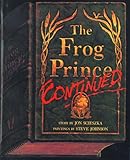
Favorite Adaptations: The Frog Prince, Continued by Jon Scieszka

Here is Heather's entry in the Favorite Adaptations giveaway to win a copy of Kill Me Softly by Sarah Cross. The window for entries has been extended to April 14th and more entries are trickling in this week. Although the window is closing in a few days to win the book, I will be publishing the entries throughout the month of April. You can submit after Saturday, you just won't have a chance to win the book.


When I try to think about my favorite adaptations of fairy tales, I tend to think of children’s books first. Perhaps that’s because children’s versions resonate with me the way fairy tales do, or perhaps it’s because I spent three years working as a library assistant in a school library with an amazing fairy tale collection, so I read many wonderful adaptations in a relatively short time. A few great ones come to mind: A Tale Dark and Grimm, Breadcrumbs, Rapunzel’s Revenge, and Ella Enchanted, to name a few.


One that really stands out, though, is Jon Scieszka’s The Frog Prince, Continued. In this picture book, the Frog Prince is living unhappily as a human, fighting with his princess and wishing he could just go back to being a frog, so he sets off to find a witch who can make the transformation for him. In his search, he meets witches from other fairy tales, as well as Cinderella’s fairy godmother, and ultimately realizes how to get his happy ending himself.

At the library, this book made for an excellent last-day-of-class read, because it so clearly illustrated how fairy tales can be adapted and combined to produce new meaning (a frequent topic of library discussion), it’s a hilarious book, for librarians and third graders alike, and it’s tremendously fun to read aloud. I couldn’t help but think, reading it that way, that one of the many reasons fairy tales survived was that they were something communities could share and enjoy together, and books like this one continue to serve that purpose today.

From Heather Jeanne, but I blog about fairy tales as Beatrix Cottonpants at http://www.beatrixcottonpants.com/

Wednesday, April 11, 2012

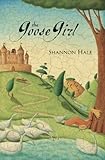
Favorite Adaptations: The Goose Girl by Shannon Hale


Here is Molly M.'s entry in the Favorite Adaptations giveaway to win a copy of Kill Me Softly by Sarah Cross. The window for entries has been extended to April 14th and more entries are trickling in this week. Although the window is closing in a few days to win the book, but I will be publishing the entries throughout the month of April. You can submit after Saturday, you just won't have a chance to win the book.


Shannon Hale's novel The Goose Girl is one of my ultimate favourite fairy tale adaptations. Hale's ability to take such a strange and short story and turn it into a beautiful novel is amazing. I love her characterization of Ani and how she made the story so believable, yet keeping the feeling of a fantastical story. She takes elements of the story that may not make sense to a modern audience, or just seem strange, and creates a believable scenario. Hale's writing style is beautiful and sticks to the mood of a fairy tale. One of the reasons I love the novel so much is Hale's ability to create such an intricate world from such a short story. It's a wonderful book, one I've read many times, and I highly recommend it to anyone who likes fairy tale adaptations. The audiobook is also very well done, with a full cast of voice actors for the many characters. The writing, the plot, the world-building, and the characterization of the novel all flows together to create an excellent new story. It's hard to put into words my feelings about this novel eloquently, but it really is an amazing book that you should read.

Tuesday, April 10, 2012

Favorite Adaptations: Snow, Glass, Apples by Neil Gaiman

Jhane from the Philippines submitted two entries to the Favorite Adaptations giveaway to win a copy of Kill Me Softly by Sarah Cross. This is her first one. I will share the other later this week.


One of my most favorite adaptations or versions of Snow White is Neil Gaiman's Snow, Glass, Apples.

It may not have been directly revealed that it is a retelling of Snow White, but it is more than implied that it is.

It is dark and a really different version that you would really think otherwise of Snow White, and maybe, just maybe, side with the Queen this once. It will make you think a lot - how it made sense that Snow White is actually this or that [I do not want to spoil!] and that you'd realize you have been fooled by the many beautiful versions of the fairy tale.

I enjoyed it a lot, seeing the story on a different perspective and having a lot more to consider and think about. i was immersed in this particular short story for a short while, and it has made its mark in my mind. I am pretty sure everyone's going to like it, if not love it. :)

Monday, April 9, 2012

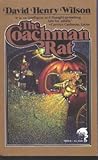
Favorite Adaptations: The Coachman Rat by David Henry Wilson

Here is the another entry in the Favorite Adaptations Giveaway. This entry is by Sam Valentino. Read more about the giveaway here to learn how to win a copy of Kill Me Softly by Sarah Cross. I am extending the deadline on entries through April 14th since I didn't think ahead about last week being spring break and vacations for so many.


A book I can highly recommend – and wish more people knew about – is David Henry Wilson’s The Coachman Rat. The main character is, naturally, the rat turned coachman from Cinderella, named Robert. After the iconic story, the book then goes on to chronicle Robert’s life post-transformation (or rather post-post-transformation, as he’s turned back into a rat at the stroke of midnight). The writing is wonderful, but that’s only one of the many good things about the book. Cinderella, her stepfamily, and the Prince may be minor characters, but for me, they stand out from other modern versions. Further, Robert as a rat has a unique, non-human viewpoint that he’s willing to discuss with the more open-minded characters in the book. Though there are plenty of close-minded characters as well, who want to fit Robert’s experience in with either their expectations or their plans.

But it’s not all a fun fairy tale. At about the middle of the book, the story takes a very dark turn. It veers off so wildly that I don’t want to say how, as it would ruin the surprise. And even though it is a radical departure from the first half, it is completely in line with the personalities that lead up to it. Perhaps the reason it comes as such a surprise is that it’s not the sort of thing that usually shows up in tales like these, which for me made it all the better.

Although it’s likely to be found in libraries, it’s unfortunately out of print. Which is a shame, as it really is one of the more creative versions of a very often-told tale.

My blog address is http://art-sam-ples.blogspot.com/– which contains, among other things, pages from Frog Prince and Gingerbread Man books I made for my kids, along with other fairytale-inspired drawings. My website is http://www.samuelvalentino.com/.

Thanks very much - Sam Valentino

Friday, April 6, 2012

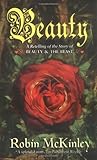
Favorite Adaptations: Beauty by Robin McKinley

Here is the another entry in the Favorite Adaptations Giveaway. This entry is by Christine Ethier, too. Read more about the giveaway here to learn how to win a copy of Kill Me Softly by Sarah Cross. I am extending the deadline on entries through April 14th since I didn't think ahead about this week being spring break and vacations for so many. Probably because this week has been anything but for me...


There is something about the Beauty and the Beast story that is attractive to society in general and to the literature, movie making crowd in particular. Jane Eyre, Wuthering Heights, Middlemarch and other books in varying literary quality draw on the motif, subverting, perverting, or simply retelling it (One of my faves is Jane Yolen's version which is a mash up with O Henry's Gift of the Magi). It is no surprise that Robin McKinely was drawn to the tale, twice, and any reader can see the germ of the second novel in this book, her first.

McKinley's writing, in particular The Hero and the Crown, was one very important touchstone of my childrhood, as it seems to be for many fantasy reading women of my age. I can't help but wish that teen girls of today would read her the obessive way and in the vast amount of numbers of those that read Twilight or Harry Potter and the Sorcerer's Stone. McKinley writes better, and she will most likely last longer.

This book, McKinley's first and her first retelling of Beauty and the Beast, was totally ripped off by the Walt Disney Company for thier movie. It's actually sad and insulting because not only did Disney rip it off, but they totally shortened the Beauty character (now, before people come and demand my Tigger shirt back, I happen to like the Disney movie, but a spade is a spade. Get over it).

McKinley draws heavily on the French version of the story, yet she makes it her own. Beauty likes to read, but unlike Disney's Belle (Beautiful in French), Beauty reads literature, not the romance novels of her day. Belle's love of reading is based on her love for romantic adventure; Beauty's is based on a love reading for itself and for knowledge. She is a scholar. It is difficult to imagine Disney's Belle having the same reaction to the library in this book, that Beauty does (also, we are never given a title of what Belle reads, hmmm).

Another change that McKinley makes, and she is one of the few authors who does this, is make Beauty's family a loving family. Beauty not only loves her father, but she loves her sisters. She and her sisters get along. They take to each other, not down to each other. They are not in competition. This isn't a fairy tale of the bad sisters being punished and the good (always the young one) being rewarded; it's about a loving family being rewarded.

Because this is early McKinley, there are flaws in the book, flaws that make the reader understand why McKinley basically rewrote the story in Rose Daughter. Beauty, for instance, is almost too perfect. She is the girl who stands out because she is not only more bookish, but more boyish than the other women. This perfection is dealt with in the end sequence. Additionally, Beauty's gaining of Greatheart feels like a wish fullment version of the horse movie of the week. But these are really, almost nit-picking. The most serious flaw is the fact that Beauty's sisters, Grace and Hope, are almost interchangable, though fully likable. McKinley also presents the view that being non-bookish is not any worse than being bookish, which is nice.

What I truly love, now, however, is simply that I only realized when I re-read this book as an adult. Beauty and the Beast from its earliest days was always a story about women and marriage, in particular the fear of marriage that must have developed in a society when the marriages were arranged and husband and wife barely knew each other. McKinley keeps this, and adds, understandably, a fear of desire and of changing into an adult. In many of Beauty's reactions to Beast there is the change of pubertry but also that struggle of coming to terms with adult desire, love, and one's own sexuality.

Thanks, Christine!