Showing posts with label fine art. Show all posts

Saturday, November 16, 2013

Thomas Sully's Fairy Tales at the Milwaukee Museum of Art


THOMAS SULLY American, born England, 1783–1872 Cinderella at the Kitchen Fire, 1843 
Oil on canvas, 50 × 58 in. (127 × 147.3 cm) Dallas Museum of Art, gift of the Pauline Allen Gill Foundation, 2005.1

One of the most beautiful museums in the world architecturally, in my humble opinion, is the Milwaukee Museum of Art. The museum is actually three buildings, but I am referring specifically to the Quadracci Pavilion. It is very modern in appearance and sits on the edge of the water, looking like a ship at dock. It even has sails that move daily.

From the site:

The Museum’s signature wings, the Burke Brise Soleil, form a moveable sunscreen with a 217-foot wingspan. The brise soleil is made up of 72 steel fins, ranging in length from 26 to 105 feet. The entire structure weighs 90 tons. It takes 3.5 minutes for the wings to open or close. Sensors on the fins continually monitor wind speed and direction; whenever winds exceed 23 mph for more than 3 seconds, the wings close automatically.

According to Santiago Calatrava, “in the crowning element of the brise soleil, the building’s form is at once formal (completing the composition), functional (controlling the level of light), symbolic (opening to welcome visitors), and iconic (creating a memorable image for the Museum and the city).”

The “wings” open at 10 a.m. in accordance with regular days of operation, close/reopen at noon, and close at 5 p.m. (8 p.m. on Thursdays). Schedule is subject to change without advance notice due to weather/maintenance.

The interior is also light and airy and a feast for the eyes. I am a classic person and love old European architecture, but I also just love stunning architecture and you can see some in motion at the museum. Pictures do not really do it justice.

So why am I talking about this museum on a fairy tale blog? Currently there is a special exhibit there, Thomas Sully: Painted Performance, and within it are two fairy tale themed paintings. They won't necessarily be your all time favorites, but if you are in the area and enjoy art, it's an extra reason to visit the museum. The exhibit is there from October 11, 2013–January 5, 2014, so it will be around if you are in the Chicago area, too, during the holidays. Milwaukee is a quick, very quick trip unless there is bad traffic, from Chicago, a little more than an hour if you can travel the 90 miles on a clear interstate. I know because I've done it. And there's plenty at the museum to see besides the Sully exhibit, too.

From Work in Focus: Cinderella at the Kitchen Fire:

One of Thomas Sully’s most important subject pictures—or “fancy” pictures as they are often called—is his monumental Cinderella at the Kitchen Fire (1843). The story behind it offers a fascinating look into the world of a nineteenth-century working artist.

From the late 1830s into the 1840s, several economic crises threatened the United States. This affected the portraiture market, since potential customers chose to spend less money on luxury items. This hit Sully right where he lived.

In response, Sully accelerated his production of subject pictures, which he intended to exhibit publicly and offer for sale on speculation. One of these was Cinderella, which he painted in less than three months. His daughter Rosalie (herself a talented artist) was the model for the beleaguered heroine.

Sully’s choice of Cinderella was a shrewd one. Since its first publication in America in 1812, the story had appeared in multiple editions. It had also been the subject of a popular opera that had toured the U.S. the previous year, including Sully’s hometown of Philadelphia.

Sully depicted his heroine seated among the ashes of the kitchen, taking a break from her drudgery to play with a lively cat. In the background, her wicked stepsisters vainly primp while getting ready for the royal ball. The scene is set for the Fairy Godmother to appear and transform Cinderella into the ravishing beauty who attends the ball and captivates Prince Charming, leading to her very own happily ever after. The delicate pink and gray tones of the painting—and Rosalie Sully’s modest expression—emphasize Cinderella’s youth, innocence, and beauty.

Sully exhibited this painting in Philadelphia and Baltimore, where it was eventually purchased by a rich industrialist collector, whose family owned it until well into the twentieth century.

The Cinderella painting is on loan to the exhibition from the Dallas Museum of Art. I've shared it previously on the blog with the story of its acquisition.

In addition, there is another painting, Sarah Esther Hindman as Little Red Riding Hood, which belongs in a small but interesting genre of paintings from the 19th century, portraits of girls as Little Red Riding Hood. I've posted about these before here and here. And I see additional ones randomly every so often. I always enjoy these as a symbolic representation of how pervasive fairy tales were in 19th century popular culture--after all this is the time period when the Grimms and others were working to bring their familiar collections to us--inspiring artists and families to want expensive portraits of young daughters as an iconic character. LRRH was Perrault's influence from over a 100 years earlier, of course, but the popularity of fairy tales is apparent.

THOMAS SULLY American, born England, 1783 – 1872 Sarah Esther Hindman as Little Red Riding Hood, 1833 
Oil on canvas, 52 1 ⁄2 × 32 1 ⁄2 in. (133.4 × 82.6 cm) The Maryland State Archives, MSA SC 4680-10-0096: Photo by Harry Connolly

Sunday, December 9, 2012

Heidi's Wishlist: Psyche Revived by Cupid's Kiss


Eros (Cupid) & Psyche by Antonio Canova Greek Roman Mythology Lovers Statue, Marble Finish 11-inch is another item on my personal wishlist. The statue is actually titled Psyche Revived by Cupid's Kiss.


There are a few pieces of art in the world that are beloved by many. While it sometimes feels trite to love them when they are so popular, there are some that have such power that no apologies can really be expected. And, of course, several of these are in the Louvre. No, I don't mean the Mona Lisa. She leaves me cold. But Cupid and Psyche by Antonio Canova and the Victory of Samothrace are two of my favorites. Another favorite is the Unicorn Tapestries in the Cloisters in New York. Their power over me quite shocked me but that is another entry for another day.


I have been to see the real Canova piece in the Louvre several times, but this is a wonderful statue and I hope to see it many more times. Since I am currently working on Beauty and the Beast Tales from Around the World, Cupid and Psyche is particularly frequent in my thinking these days. I've always been drawn to these ATU 425 tales more than any other so I am really loving working on this book.


These images are my own from my 2008 trip. It is so hard to get good pictures of this piece because it is large, it's corner can be dark, and it is usually swamped by tourists. I am actually surprised I got photos this good, although my desired close-up studies overall turned out too blurry to share. In these situations, I'm an amateur photographer and tired tourist with a basic touristy camera trying to get some shots before someone jostles me or steps into my view range. Very frustrating. But the statue makes me forget.


The statue may have to be my reward for when I finish the Beauty and the Beast tales book. And if you, too, love Cupid and Psyche in art, I highly recommend The Tale of Cupid and Psyche: An Illustrated History. It costs more than the replica statue, but it is a pleasure.


Friday, March 16, 2012

Art: Cinderella by by Joseph Albert Colquhoun Morrison


Cinderella
by Joseph Albert Colquhoun Morrison
Oil on canvas, 39.3 x 31.8 cm
Collection: The Stroud District (Cowle) Museum Trust Collection

Now isn't that an unexpected time period for a Cinderella? Anyone want to analyze her clothes and figure out the date on this one? Morrison studied from 1901-1904 and had a long career--at least through 1931 but I cannot find easy dates in a quick search.

Again via the Your Paintings Project.

Art: Cinderella by George Cruikshank


Cinderella
by George Cruikshank
Date painted: 1854
Oil on panel, 43.2 x 53.3 cm
Collection: Victoria and Albert Museum

Cruikshank's pen and ink drawings are so ubiquitous to his name that it is rather startling to see what is so certainly his style and work in a colorful medium. I really love the fairy godmother and pumpkin coach in process.

Again via the Your Paintings Project.

Art: The Sisters of Cinderella by Walford Graham Robertson


The Sisters of Cinderella
by Walford Graham Robertson
Date painted: 1905
Oil on canvas, 104 x 103 cm

The painting shows a woman wearing a blue dress and holding a fan on the right, a second woman in the centre looking into mirror and a woman on the left in a white dress..

Found through the BBC's Your Paintings site, a great project!

Sunday, February 26, 2012

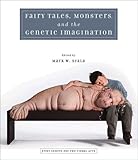
Fairy Tales, Monsters, and the Genetic Imagination Exhibit Preview


I have the opportunity to attend the media preview of Fairy Tales, Monsters, and the Genetic Imagination this past week. The exhibit opened here in Nashville on Friday at the Frist Center. This week I plan to highlight the work of several of the artists represented in the exhibit, but that begins tomorrow. Today I wanted to share a link and a few of the images from the Nashville Scene's preview of the exhibit installed to entice you to go over there and look.

Go to Installation View: Fairy Tales, Monsters and the Genetic Imagination at The Frist by Laura Hutson to see many more pictures than these. The three I share here are borrowed from the article and all rights belong to the photographer and Nashville Scene. I was there when these were take and managed to only get half photographed in one. (So, nothing for Pinterest, Gypsy. Grin. I like it that way.)

The exhibition catalog is already temporarily out of stock at Amazon which I hope means there was a demand for it since I know it shipped to at least one friend this week. (It also was probably fairly low inventory since Amazon had bumped the original ship date to late March and then shipped copies this week when they became available to those who preordered.) The catalog has two great essays by Jack Zipes and Marina Warner which will be of particular interest to readers here.


The exhibit moves to Winnipeg this summer and then on to Calgary. Here in Nashville, however, one can still attend a few curator tours which expand upon the collection even more. Mark Scala brings out nuances and details in the collection that I may have missed after several visits.


For those only interested in the fairy tale aspect of the exhibit, the out right fairy tale interpretations are limited to the first room and then the exhibit expands to fairy tale and folklore inspired themes and moves on to monsters, etc. I think it is still worth the price of admission to you, too. Here in Nashville, the fairy tales are in a cave like room, with trees surrounding the doorway. The forest theme is perfect and the exhibit's designers did a great job with colors and displays. (I'm always impressed with the Frist's display decisions in exhibits like these.)


Monday, February 13, 2012

Grimm Legacies 2012: "Henry Darger, Adolf Wolfli, and Tales of Violence in Outsider Art" by Cara Zimmerman


I admit that before I heard Cara Zimmerman's presenation, “Henry Darger, Adolf Wolfli, and Tales of Violence in Outsider Art,” at Grimm Legacies, I knew virtually nothing about Darger's work. (Zimmerman didn't include the Adolf Wolfli part of her presentation due to time constraints.) I know I wasn't alone and much of the after conversation of those who did seemed to be based on watching the documentary about Darger, In the Realms of the Unreal: The Mystery of Henry Darger.

I am going to resort to Wikipedia, since my notes are muddled. I spent more time just processing the art displayed and listening to Zimmerman than trying to take notes since my knowledge was near null.

Henry Joseph Darger, Jr. (ca. April 12, 1892 – April 13, 1973) was a reclusive American writer and artist who worked as a custodian in Chicago, Illinois. He has become famous for his posthumously-discovered 15,145-page, single-spaced fantasy manuscript called The Story of the Vivian Girls, in What is known as the Realms of the Unreal, of the Glandeco-Angelinian War Storm, Caused by the Child Slave Rebellion, along with several hundred drawings and watercolor paintings illustrating the story. Darger's work has become one of the most celebrated examples of outsider art.
Darger's personal library included fairy tale books and Baum's Wizard of Oz. The presentation was fascinating, but the allusion to specific fairy tales is faint so I don't have much to share in that way either. Overall, Darger is a fascinating man who was fascinated with children, children's stories and fairy tale like motifs in his writing and art. There are many great books if you want to read more about him, which I am including in this post.
 

Tuesday, January 3, 2012

A Collection of Vintage Fairy Tale Treasures By Marissa Meyer


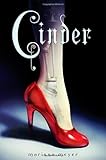
Today is the day! Cinder: Book One in the Lunar Chronicles by Marissa Meyer is released today. (Here's an ebook link if you prefer that.) This book is burning up the internet with buzz and talk and I agree that it is a fun book that made Cinderella interesting even to me. (When you do what I do on a daily basis, Cinderella can get stale at times, I admit.) I've enjoyed many of Marissa's guest posts around the online book world the past few weeks--she's had some clever ways of giving us variety as well as emphasizing that this book has something for all sorts of genre readers, from romance to science fiction--and she didn't want to leave out SurLaLune. Instead of another post about her interpretation of Cinderella, Marissa decided to share, well, never mind, I'll let her tell you herself. Here's Marissa's guest post:

A Collection of Vintage Fairy Tale Treasures
By Marissa Meyer

When Heidi offered me a chance to write a guest post for SurLaLune, a blog that I’ve been a long-time fan of, it occurred to me that I should probably talk about my debut novel—Cinder, a futuristic retelling of Cinderella. But I’ve been talking an awful lot about my book lately, and instead I thought this would be a great opportunity to write about something entirely different, that I hope SurLaLune readers will enjoy: a virtual show & tell of my vintage fairy tale collection.

Although people have been giving me old copies of The Brothers Grimm fairy tales since I was a kid, my collection of old fairy tale things only started about two years ago when I was at an antique show with my then-boyfriend (now husband). I came across this set of tiles with fairy tale illustrations:

Tiles: Little Red Riding Hood, Goldilocks, Jack and the Beanstalk, The Pied Piper, & Cinderella

I fell in love with them immediately, and have been looking for fairy-tale inspired pieces ever since. Luckily, my husband loves antique stores and estate sales as much as I do (his weakness being early-twentieth-century baseball memorabilia), so I have lots of chances to go on the hunt.

Some of my favorite pieces include this Cinderella cookie jar:


This xylophone that includes both fairy tale characters and other storybook favorites (Cedric/Little Lord Fauntleroy, Snow White, Pinocchio, Hansel, Gretel, the Swan Prince, Cinderella, Tyl Tyl, Mityl, Red Hood, Alice, & Nils):


And this Snow White lunch pail which has an adorable board game on the back:


Generally, I try to stay away from Disney items because they’re so common the collection would no doubt take over my entire house, although some Disney knock-offs are too cute to say no to. I also refuse to look on eBay, as that would take all the fun out of the treasure hunt. I estimate most of my findings to be from the 30s and 40s, though I’m by no means an expert.

Red Riding Hood tin tea set


Greeting Cards—the set includes both fairy tale favorites, such as Goldilocks and Snow White, and also nursery rhymes, such as Little Miss Muffet. Interestingly, Jack and Jill make an appearance, but both are illustrated as girls.
Snow White vase/figurine, a recent wedding gift, along with my camera-hogging cat


A block puzzle that makes up six different illustrations

One peculiar trend that keeps popping up is the case of the blonde Snow White, as opposed to the well-known “hair as black as ebony” trait. See the xylophone above, along with this Snow White embroidered pillowcase:


And also this German-made piggybank (which has Red Riding Hood on the other side).


I also have 13 plates from the 1970s, each representing a different tale (well, two of them are Rumpelstiltskin), but I think this post has gotten picture-heavy enough. Perhaps Heidi will be kind enough to invite me back to share them with the publication of Book #2. :) (Yes, please do! says Heidi.)

If you think you’d like to start a collection of fairy tale treasures of your own, the only advice I can give is patience and diligence. Just like with any collection that involves old things, I might go months and months without finding anything, and then I’ll stumble onto three great new pieces at a single antique fair. You just never know when something new will catch your eye.

If anyone has any questions about the pieces I have, I can try my best to answer them! Thanks for having me on the blog, Heidi, and letting me share with your readers.


Marissa Meyer debut novel, Cinder: Book One of the Lunar Chronicles, comes out on January 3. You can follow her on Twitter (@marissa_meyer) or become a fan on Facebook (facebook.com/lunarchronicles and facebook.com/marissameyerauthor).

Back to Heidi: Thanks, Marissa! This was a fun post and perfect for SurLaLune. You know us well here!

Wednesday, December 14, 2011

More About: Fairy Tales, Monsters, and the Genetic Imagination


Fairy Tales, Monsters, and the Genetic Imagination

I posted previously about the upcoming exhibit, Fairy Tales, Monsters, and the Genetic Imagination, in my own Nashville in 2012. Now I have much more extensive information about it. All the text below is from the press releases with hyperlinks and imagery added by myself:

Fairy Tales, Monsters, and the Genetic Imagination, an exhibition of photographs, paintings, videos, sculptures and installations by contemporary artists who invent humanlike, animal or hybrid creatures to symbolize life’s mysteries, desires and fears, opens Feb. 24 and remains on view in the Frist Center for the Visual Arts’ Upper-Level Galleries through May 28, 2012.

The invented creatures and imaginary worlds featured in the exhibition have been inspired by oral and written sources as diverse as Aesop’s Fables, Mary Shelley’s Frankenstein, science fiction and the products of genetic experimentation in actual science. The artists selected for the exhibition redirect the emotional associations implicit in their sources–pleasure, fear, wonder, curiosity and longing–to works of seductive fantasy and uneasy intrigue.

Organized by Frist Center Chief Curator Mark Scala, the exhibition will travel to Canada in 2012 to the Winnipeg Art Gallery, Manitoba and Glenbow Art Museum, Calgary.

“I have long been intrigued by artists and filmmakers for whom geneticists’ capacity to design new life forms has inspired fictional narratives of biological, spiritual and social transfiguration,” says Scala. “Paradoxically, in imagining futuristic fables and hybrid creatures, these artists have often borrowed from the ancient language of myth, folklore and legend, in which the human and animal are mixed together to symbolize life’s contradictions. Connecting past and future, the artists in the exhibition explore the hidden meanings behind composite creatures as they are transformed from fantasy to reality.”

The first section of the exhibition, The Fairy Tale, focuses on artists whose works adapt, interpret or critique traditional fairy tales and nursery rhymes. While questioning the socializing functions of fairy tales that perpetuate outmoded cultural stereotypes, these works also explore folklore as archetypal expressions of subliminal fears and desires. Taking a cue from Sigmund Freud’s view of the fairy tale as a vehicle for projecting an animistic view of humanity’s relationship with nature, the exhibition will consider the ways such tales extend the tradition of creating anthropomorphic beings as metaphors for the natural, rather than the social, side of humanity. In this section are works by Meghan Boody, Walter Martin and Paloma Muñoz, Paula Rego, Tom Sachs, Allison Schulnik, Kiki Smith and Amy Stein.

In Monsters, the second section in the exhibition, artists explore the depiction of the monster as a sign of the threatening “other” or of the uncontrollable forces of the psyche. The diversity of their imagery reflects the multiple associations of the word “monster,” which comes from the Latin verb monere, “to warn.” In cultures around the world, monsters have been conceived as inhuman or part-human brutes that threaten those who violate the psychological or social boundaries they were invented to protect. The monster often takes the form of the chimera, a hybrid creature that signifies the violation of natural boundaries, as in the story of Dr. Frankenstein’s monster. Artists featured in Monsters include David Altmejd, Ashley Bickerton, the Chapman Brothers, Marcel Dzama, Andre Ethier, Mark Hosford, Cindy Sherman and Yinka Shonibare.

The Genetic Imagination is the final section in the exhibition. Moving from superstition and fantasy to potential reality, the artists featured in The Genetic Imagination depict new chimeras—evocations of the hybrid human/animals of old—while reflecting actual scientific developments toward the redefinition of life, especially in the field of genetic engineering. Echoing a split that occurs in much science fiction literature and movies, some artists raise cautions about the unforeseeable consequences of such experiments. They anticipate the introduction of powerful new mutations, monsters and other potential horrors that may redefine or threaten human life. For others, the creative potential of these developments is exhilarating and promises to take the interaction between art and science to a heretofore unimaginable liberation from biology.

The works of Suzanne Anker, Aziz + Cucher, Trenton Doyle Hancock, Motohiko Odani, Patricia Piccinini, Janaina Tschäpe, Charlie White and Saya Woolfalk are included in The Genetic Imagination.

Exhibition Catalog

Fairy Tales, Monsters, and the Genetic Imagination

The illustrated catalog published by Vanderbilt University Press features essays by Mark Scala, Frist Center chief curator, Jack Zipes, retired professor of German and director of the Center for German and European Studies and the University of Minnesota; Suzanne Anker, professor at the School of the Visual Arts in New York and author of The Molecular Gaze: Art in the Genetic Age; and Marina Warner, professor in the Department of Literature, Film and Theatre Studies at the University of Essex, England.

Tour Schedule

Fairy Tales, Monsters, and the Genetic Imagination will travel to two venues:

Winnipeg Art Gallery, Manitoba Canada: June 15–Sept. 9, 2012

Glenbow Art Museum, Calgary, Alberta, Canada: Sept. 28, 2012–Jan. 2, 2013

Exhibition Credits

This exhibition has been organized by the Frist Center for the Visual Arts.

Exhibition Acknowledgements

The Frist Center for the Visual Arts is supported in part by the Metro Nashville Arts Commission, the Tennessee Arts Commission and the National Endowment for the Arts.

Exhibition-related Programs

Artist’s Performance by Saya Woolfalk: Lecture of the Artist: “Empathetic Plant Alchemy”

Friday, February 24
12:30 p.m. Auditorium
Free: Seating is first come, first served.

Saya Woolfalk’s recent work explores cultural transformation and hybridity by imagining the effects of crossing species. The artist uses a hybridized group of fictional “Empathics” to investigate systems of human classification and the reasons why we might choose to embody monstrous forms outside of known categories. In her performance Lecture of the Artist: “Empathetic Plant Alchemy,” Woolfalk will present a pseudo-scientific lecture about these Empathics who are slowly mutating to become like plants. The lecture will focus on animated images from a book called Empathetic Plant Alchemy and describe the merger of human and plant DNA.

This program has been developed in conjunction with Fairy Tales, Monsters, and the Genetic Imagination, and Saya Woolfalk is one of the artists whose work is on view in the exhibition.

Artists Panel: Invented Bodies/Hidden Meanings: Fables for our Times
Saturday, February 25
10:00 a.m.–12:00 p.m. Auditorium
Free: Seating is first come, first served.


Join moderator and Frist Center Chief Curator Mark Scala and panelists Saya Woolfalk, Trenton Doyle Hancock and Meghan Boody for a casual conversation among three guest artists who are represented in the exhibition Fairy Tales, Monsters, and the Genetic Imagination. The artists will offer their insights and perspectives on this exciting exhibition as Scala moderates what is sure to be a lively discourse of views and opinions. A question-and-answer session will form part of the overall discussion.

Curator’s Tour: Fairy Tales, Monsters, and the Genetic Imagination

Thursday, March 1 12:00 p.m.
Meet at exhibition entrance.

Free; with purchase of gallery admission

Join Mark Scala, chief curator at the Frist Center, for a conversation about artworks in this exhibition that convey themes of hybridity and anthropomorphism in the context of folklore, psychology, ethics, science and science fiction.


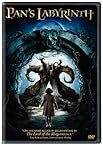
Unexpected Tales Film Series: Pan’s Labyrinth
Friday, March 16
7:00 p.m.
Auditorium
Free: Seating is first come, first served.

Fairy Tales, Monsters, and the Genetic Imagination, on view in the Upper-Level Galleries from February 24 through to May, 28, 2012, depicts composite beings and fantastic narratives that are influenced by literary sources from folk tales to science fiction. The exhibition explores themes of psychology, identity, and the future. Inspired by this constructed alternate world, the Frist Center has planned a three-part film series, Unexpected Tales, which will explore fairy tales through fantasy, monsters and genetic development.

About the film:

In 1944 fascist Spain, an imaginative young girl, along with her pregnant mother, begins a new life with her stepfather, a fierce captain of the Spanish army. At night she meets a fairy who leads her to a faun in the center of a labyrinth. The faun informs her that she is a princess and can only prove this by undertaking three grim tasks. If she is successful she will meet with her real father, the king. If she is not successful, she will never be a princess. The young girl is thrust into living two lives: one that is dark and oppressive and another that is terrifying yet alluring. Stars Ivan Baquero, Ariadna Gil and Sergi Lopez. Written and Directed by Guillermo Del Toro, 2006. 119 minutes. DVD. Rated R.

Invented Bodies/Hidden Meanings: Connecting Disciplines: “Ambivalence Towards Animals and The Moral Community”

Saturday, March 17
11:00 a.m.
Meet at exhibition entrance.
Free with purchase of gallery admission


Kelly Oliver, Ph.D., W. Alton Jones Chair of Philosophy with appointments in African-American and Diaspora Studies, Film Studies, and Women’s and Gender Studies at Vanderbilt University, will present a gallery talk in response to Fairy Tales, Monsters, and the Genetic Imagination. This talk will explore the ambivalence with which animals are treated as members of the moral community: on one hand, animals are treated as child-like innocents, while on the other, they are treated like monsters.

Oliver will discuss works in this exhibition in relation to this ambivalence while also exploring the ways animals and concepts of animality play into our fantasies and ideas about what is cruel, what is innocent, and what is natural and unnatural.

ARTini: Fairy Tales, Monsters, and the Genetic Imagination

Friday, April 13
7:00 p.m.

Meet at exhibition entrance.

Free with purchase of gallery admission

Join Keri Jhaveri, educator for youth and family programs at the Frist Center, as she leads an informal conversation about some of the works included in the exhibition Fairy Tales, Monsters, and the Genetic Imagination.

Are you curious about art? Do you want to learn more about the content and concepts behind an artist’s work? If you answered yes to either of those questions, then the ARTini program is for you! ARTinis are designed for everyone—from the novice to the connoisseur—and include informal and insightful conversations that offer a deeper understanding of one or two works of art in an exhibition.

Free Family Day Festival at the Frist

Sunday, April 15, 1:00–5:30 p.m.
Free

Enjoy a day of discovery and creativity, filled with art activities, live music and exciting demonstrations. Bring your family and friends to share in a day filled with art and imagination! Exhibitions highlighted during the free day include To See as Artists See: American Art from The Phillips Collection; Fairy Tales, Monsters and the Genetic Imagination; and Answers to Questions: John Wood & Paul Harrison.

ARTini: Fairy Tales, Monsters, and the Genetic Imagination
Tuesday, April 17
12:00 p.m.
Meet at exhibition entrance.
Free with purchase of gallery admission

Join Keri Jhaveri, educator for youth and family programs at the Frist Center, as she leads an informal conversation about some of the works included in the exhibition Fairy Tales, Monsters, and the Genetic Imagination.

Are you curious about art? Do you want to learn more about the content and concepts behind an artist’s work? If you answered yes to either of those questions, then the ARTini program is for you! ARTinis are designed for everyone—from the novice to the connoisseur—and include informal and insightful conversations that offer a deeper understanding of one or two works of art in an exhibition.


Unexpected Tales Film Series: Beauty and the Beast
Friday, April 20

7:00 p.m.
Auditorium
Free: Seating is first come, first served.


Fairy Tales, Monsters, and the Genetic Imagination, on view in the Upper-Level Galleries from February 24 through to May, 28, 2012, depicts composite beings and fantastic narratives that are influenced by literary sources from folk tales to science fiction. The exhibition explores themes of psychology, identity, and the future. Inspired by this constructed alternate world, the Frist Center has planned a three-part film series, Unexpected Tales, which will explore Fairy Tales through fantasy, monsters, and genetic development.

About the film:

Considered one of the finest fantasy films of all time, Beauty and the Beast is an adaptation of the traditional fairy tale in which Belle’s father is sentenced to death for picking a rose from the Beast’s garden. Belle’s father begs the beast for permission to see his family one more time before his death; when he returns home, Belle decides to take the place of her father and goes back to the Beast. Belle eventually becomes drawn to the Beast; he, in turn, falls in love with her and proposes marriage, which she refuses. As Belle is drawn closer to the Beast, he decides to test her feelings by allowing her to return home to her family and making it clear that if she does not return within a week, he will die of grief. This is a stunning film using surreal imagery and special effects to create a wistful, romantic story about never judging a book by its cover. Stars Josette Day and Jean Marais. Jean Cocteau’s adaptation, originally released in France as La Belle et la Bête. Written by Jeanne-Marie Le Prince de Beaumont and adapted and directed by Jean Cocteau, 1946. 120 minutes. 35mm. Unrated.

Monday, December 12, 2011

30% off Coupon for Art.com


Visit Art.com

Art.com just sent me a coupon promotion that is the best I've seen so far this season, so if you've been debating on an art print--especially a fairy tale one of which they have many--this may be for you. My big Christmas gift last year was a framed Abbott Thayer print from Art.com which I have enjoyed hanging in my bedroom all year after using a coupon like this. No, it's not fairy tale related but has special associations. But there is plenty of fairy tale art that continues to tempt me on the site.

Buy at Art.com
Cinderella Runs Away from...
Buy From Art.com

Here's the details on the deal:
30% off everything including custom framing for next two days

Use Code: GIVT30

Terms & Conditions

*Promotion applies to order total before shipping, taxes, and duties. This offer cannot be applied to previous or pending purchases. This offer cannot be combined with any other offers, discounts, coupons or promotions, except that free shipping offers may be combined with already marked-down items. One coupon per order. This offer cannot be applied to the purchase of gift certificates. No discounts may be applied to the purchase price of any Thomas Kinkade Limited Editions. We reserve the right to cancel any order due to unauthorized, altered, or ineligible use of discount. We respect your privacy and will not share your email address with third parties for their marketing purposes. This offer expires December 13, 2011 at 11:59PM in your local time zone.

Buy at Art.com
The Sleeping Beauty
Buy From Art.com

Sunday, December 4, 2011

The Lady of Shalott in Art

Here are our Sunday morning videos tribute to The Lady of Shalott, courtesy of joshje777. I include a Rapunzel tag since she shares some lady in the tower motifs. Enjoy!

Part 1:


Part 2:

Sunday, November 27, 2011

Video Tribute to John William Waterhouse by joshje777

Here is our Sunday morning video of a Tribute to John William Waterhouse, courtesy of joshje777. Enjoy! Check back next Sunday for the next in the series.

Tuesday, November 22, 2011

Fairies 2012 Calendar by Michael Hague


Fairies 2012 Calendar (Wall Calendar) features the illustration work of Michael Hague, focusing on his fairy illustrations, one of the areas where I think he excels. Here, too, is an image of the back.